
To try and work a bit faster and looser, and to experiment more with various art media like Eileen Agar (see my previous post) I have started six new flower paintings, trying to work back-and-for between them. This is in the hope that I don’t become to caught up in the detail and overwork them – it is already proving difficult for me! – you can see the problems I’ve had with my Cucumber Flower painting in my previous post. Here are some slideshows of the other five paintings so far:
HERB ROBERT AND ENCHANTER’S NIGHTSHADE
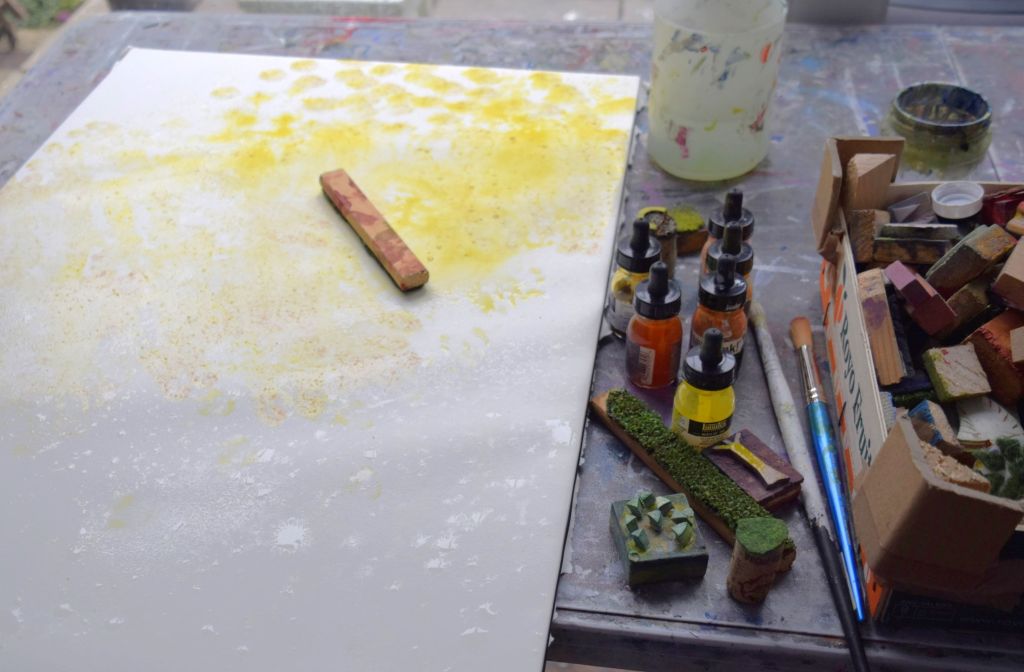
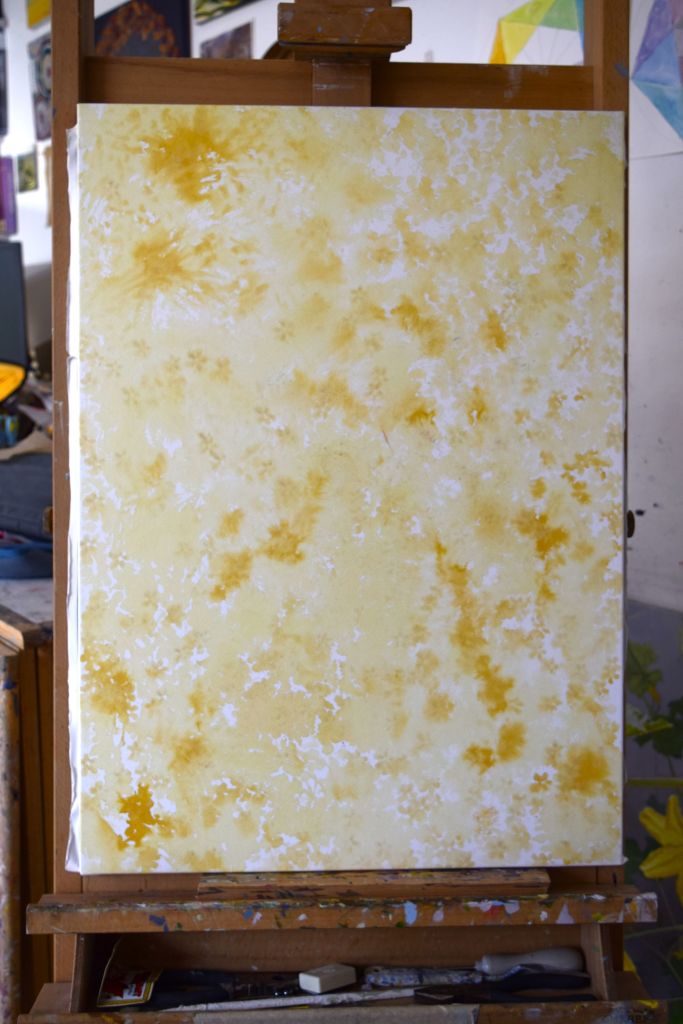
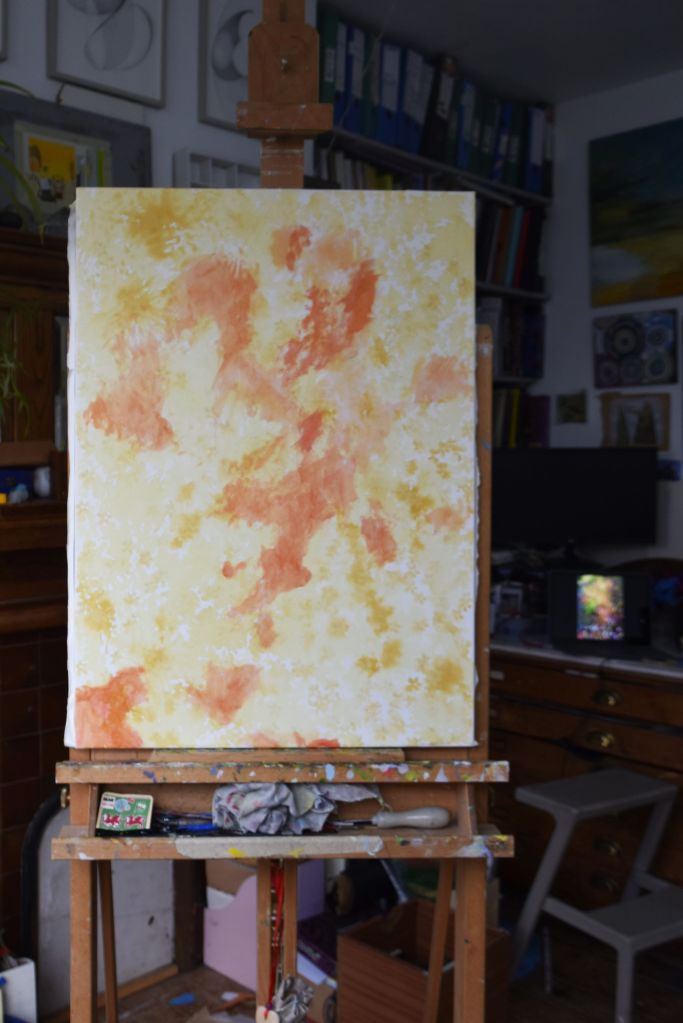
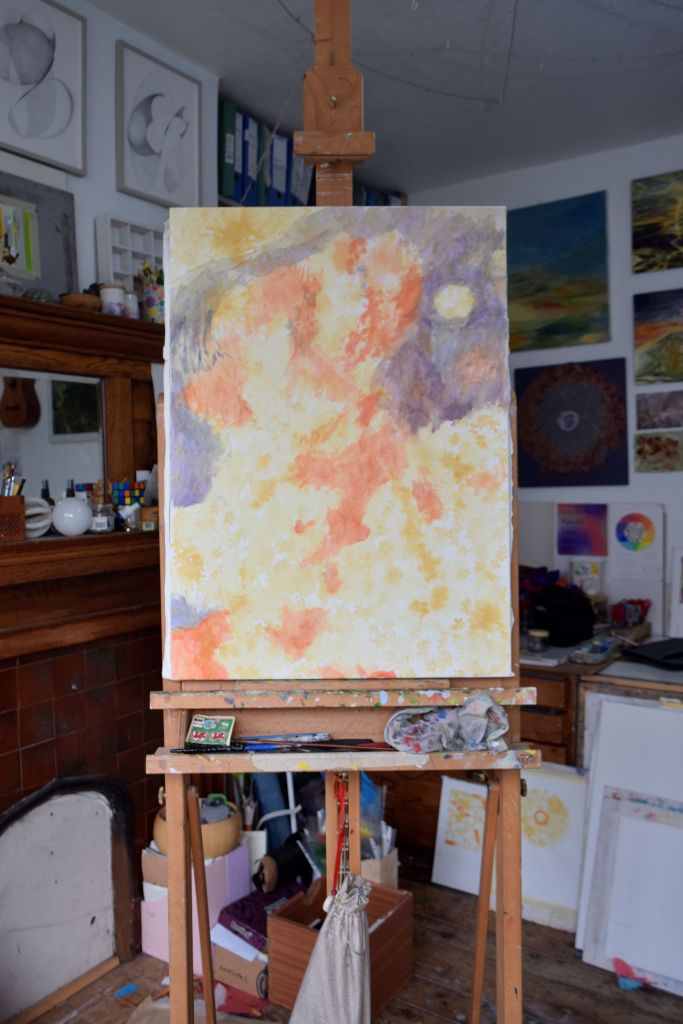
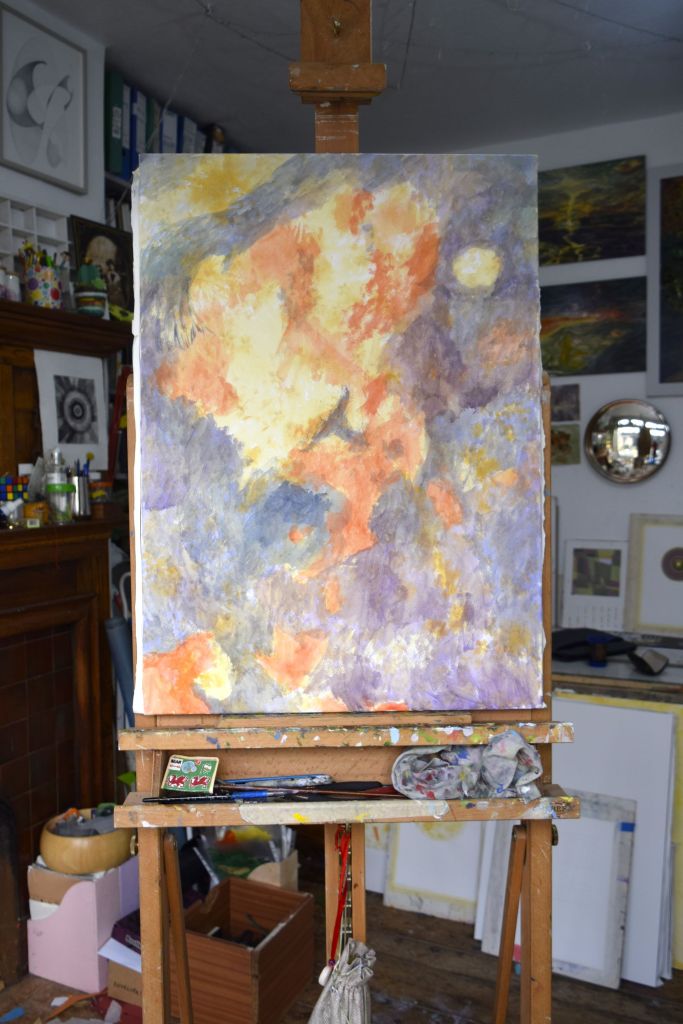
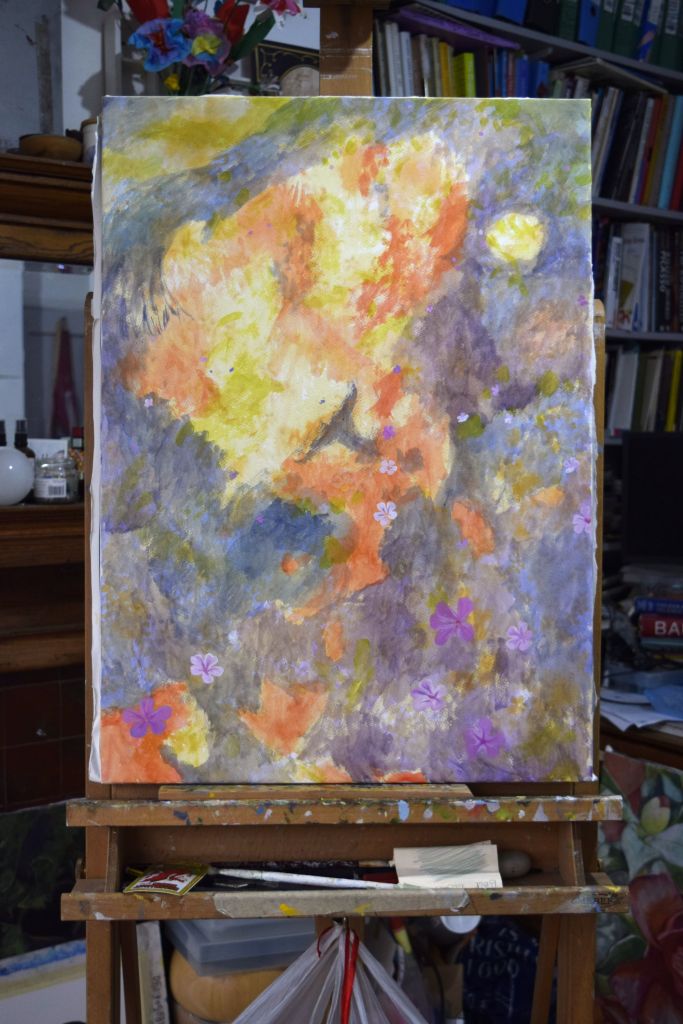
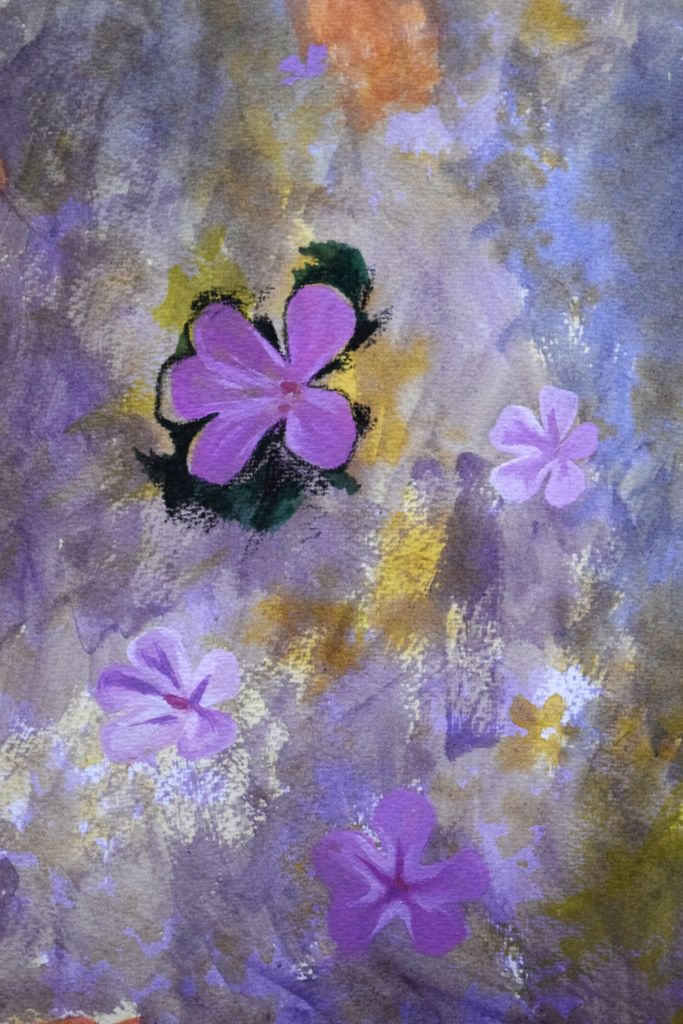
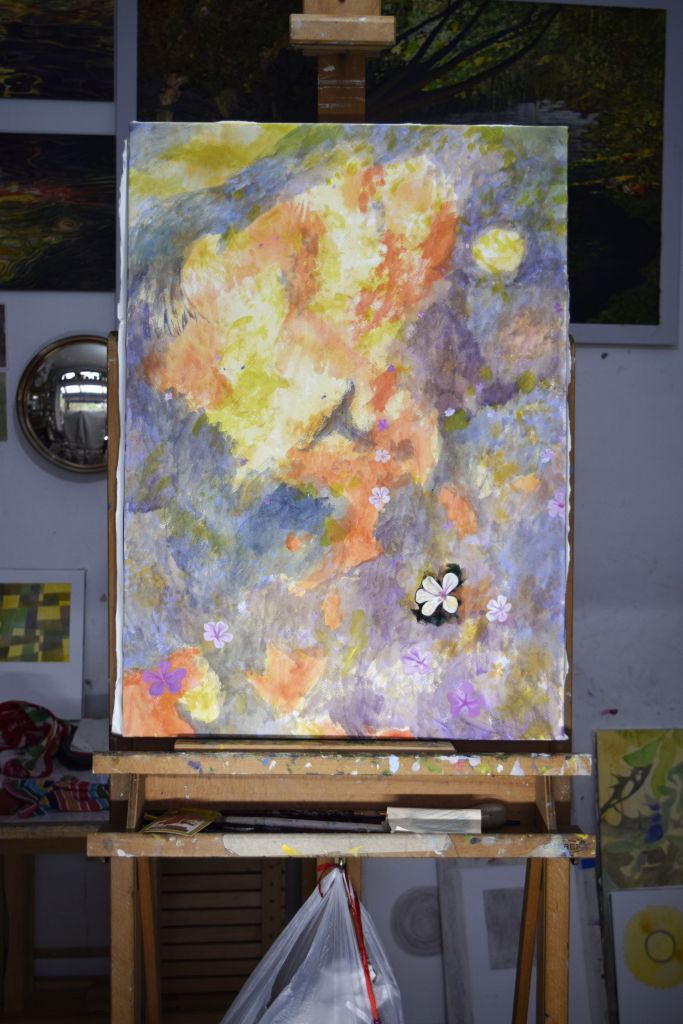
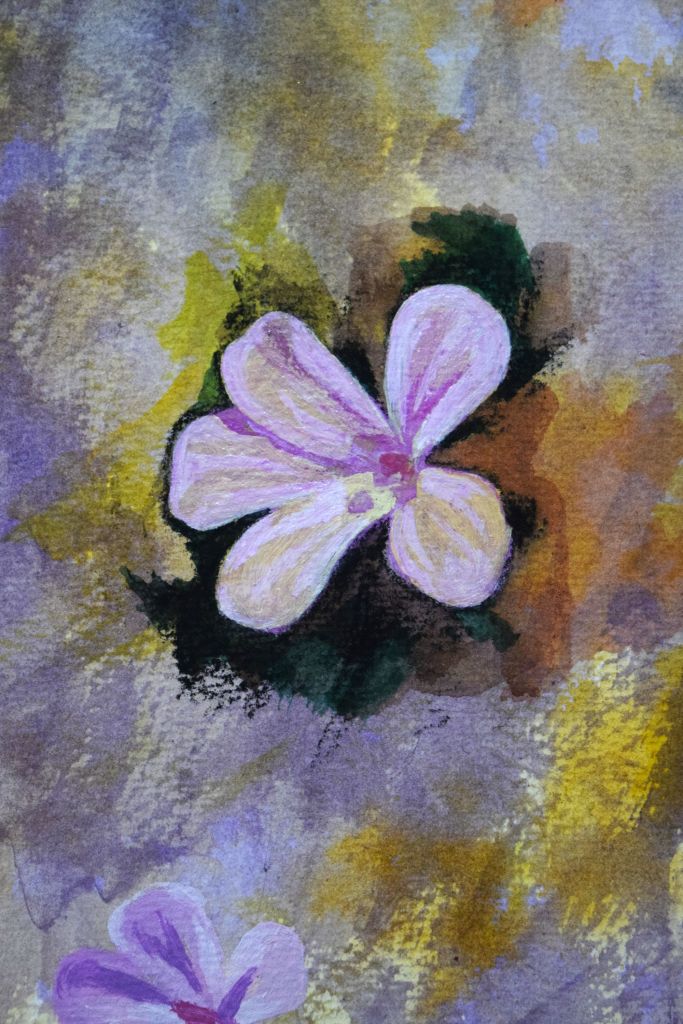
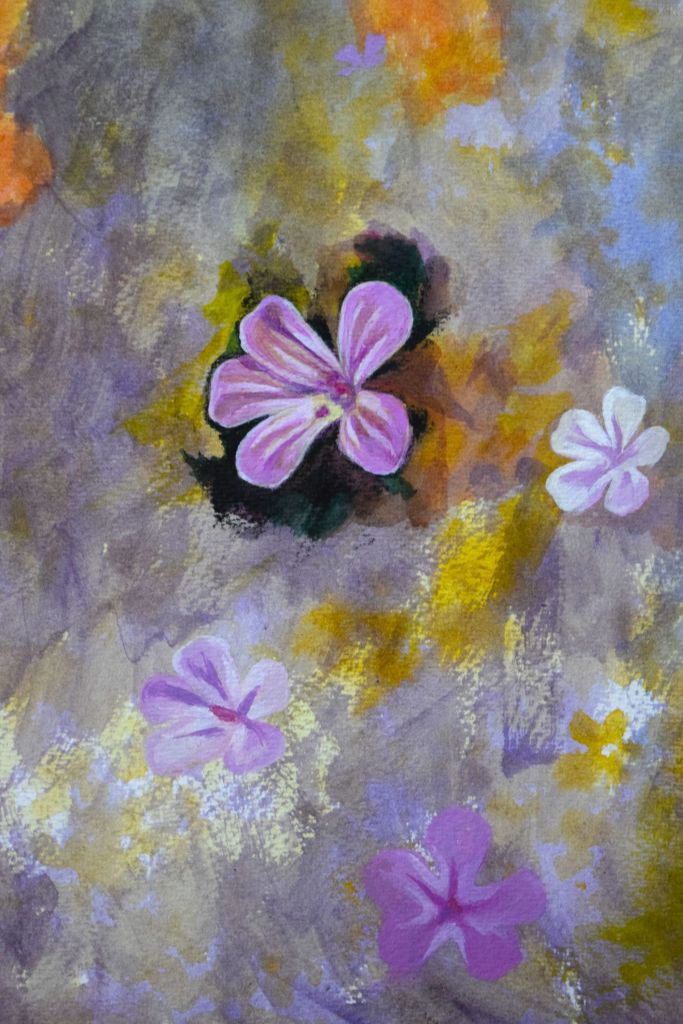
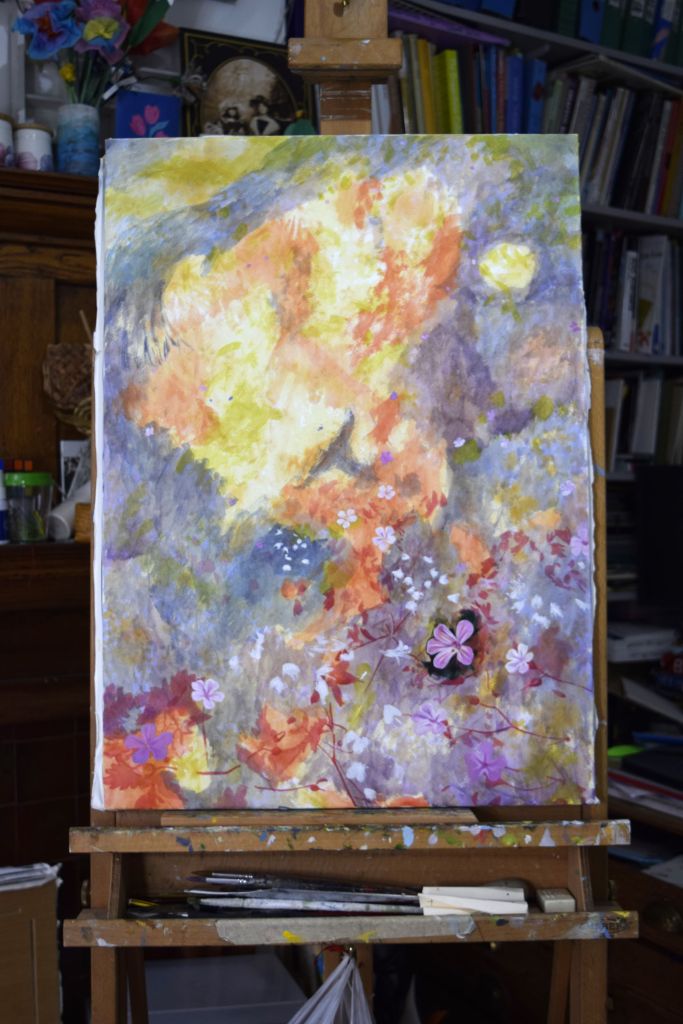
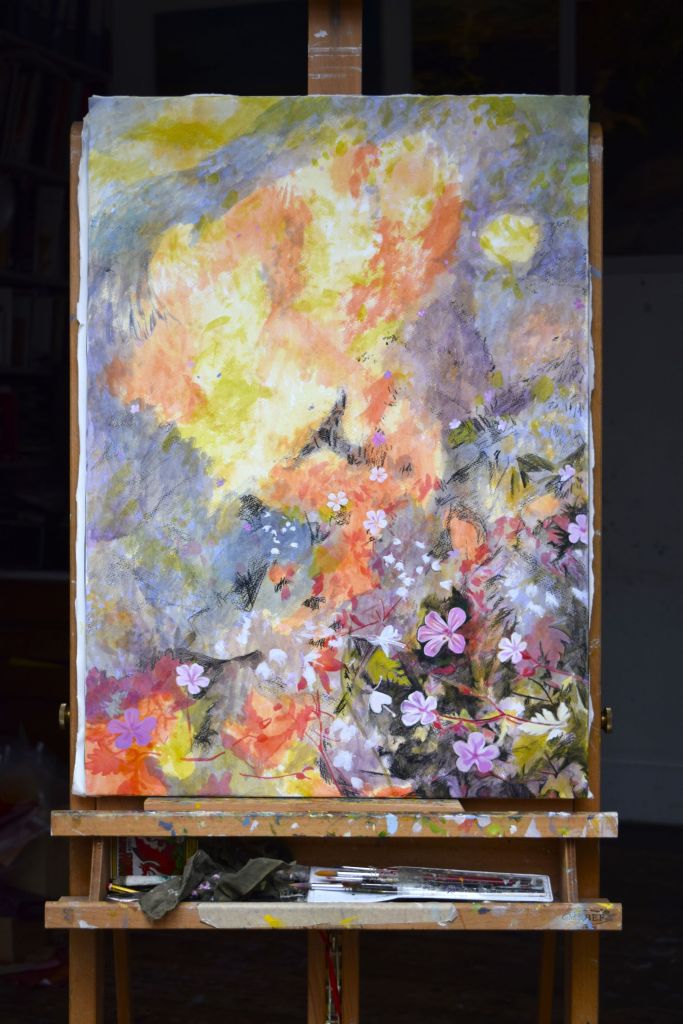
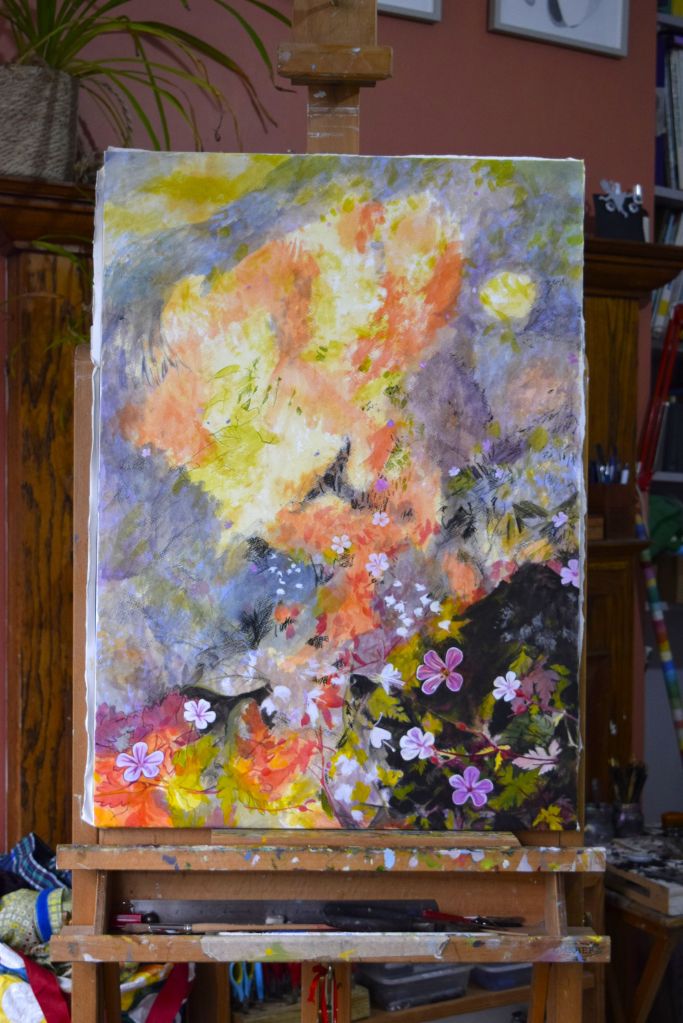
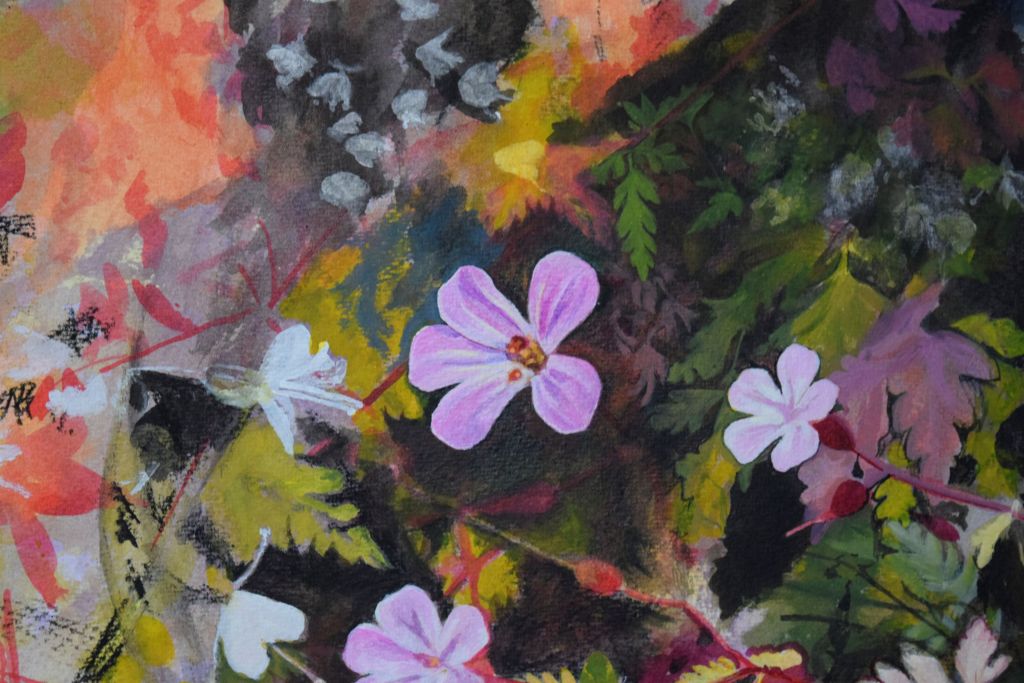
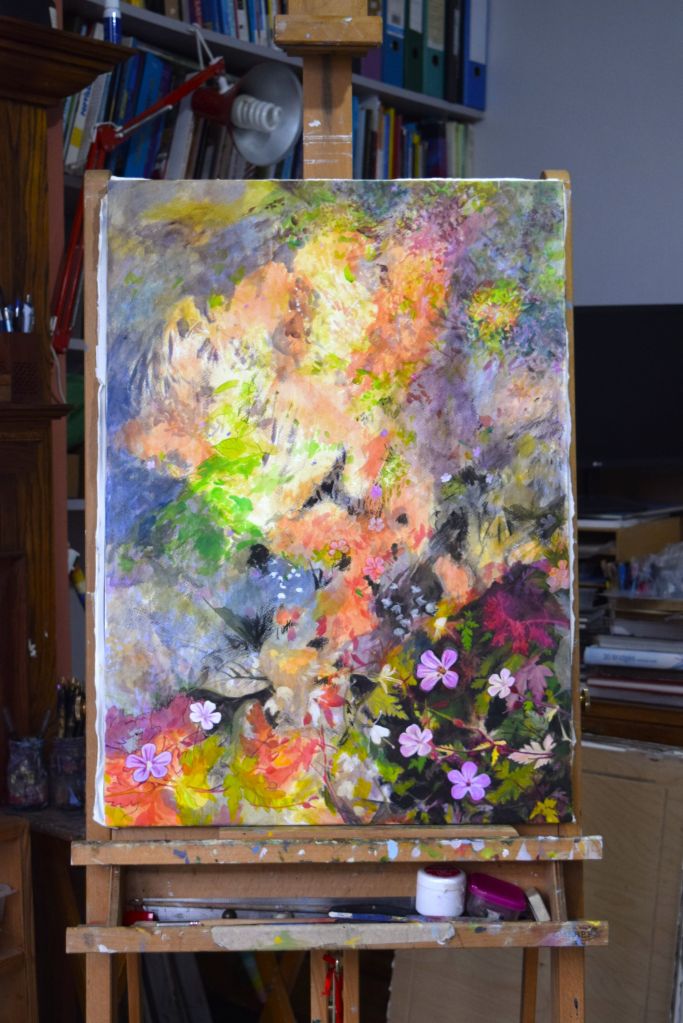
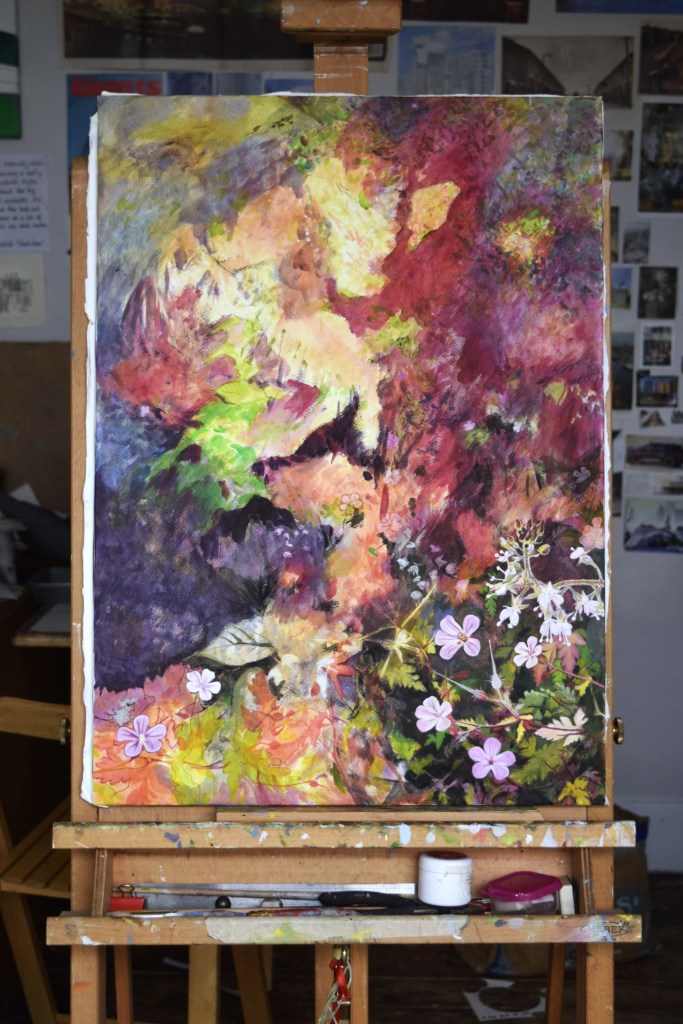
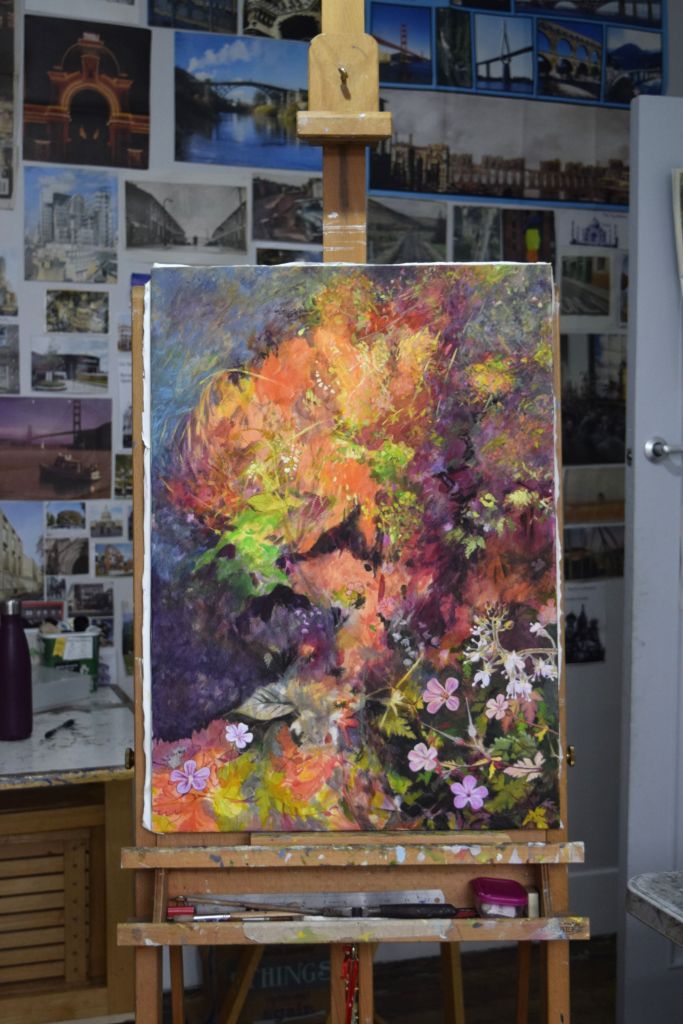
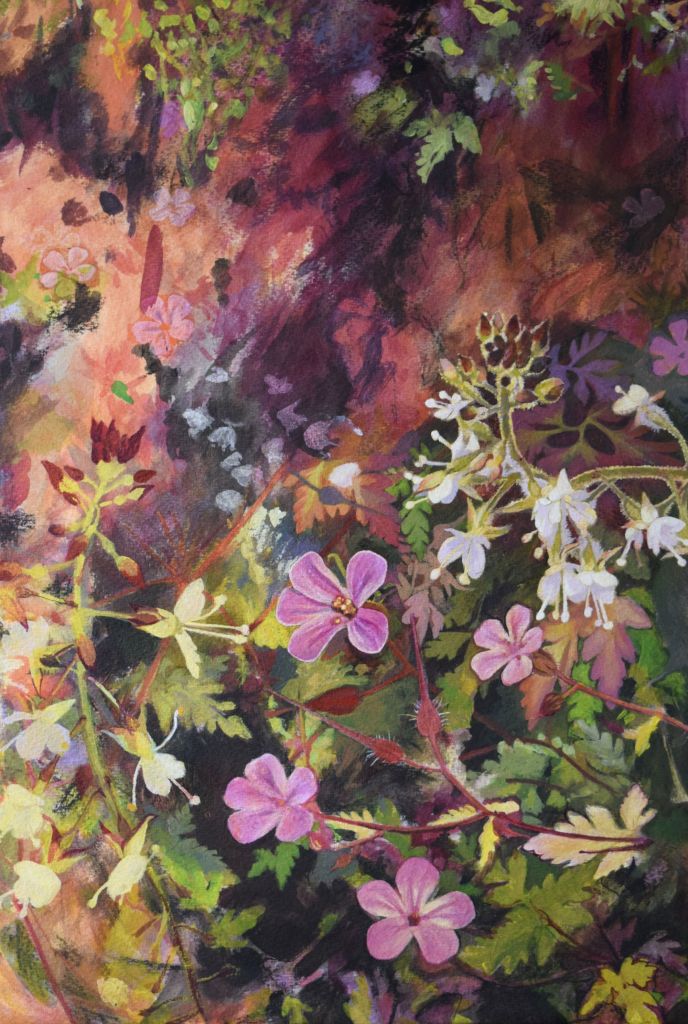
These two woodland wildflowers – Herb Robert and Enchanter’s Nightshade – grow in a large patch under rose bushes, against a north-facing fence in our back garden. I love how they look when the evening light hits them – the glowing red and green leaves with the tiny pink and white flowers shining amongst them like jewels; all brought into strong contrast by the dark shadows cast by the low sun.
Once completed, I will be selling Limited Edition Fine Art Giclée Prints of my Herb Robert and Enchanter’s Nightshade painting to support the independent environmental charity Greenpeace UK. I have been a supporter of Greenpeace for over two decades and am hugely grateful that such organisations exist – peacefully campaigning against damage to our natural environment. Established in 1971, I shared their 50th ‘birth year’, so it feels extra special to support this charity with my 50 Flowers project. Herb Robert also feels like an apt flower to have chosen as one of the important founding members of Greenpeace was Robert (Bob) Hunter. You can read about the exciting beginnings of Greenpeace here.
CARYOPTERIS (Bluebeard)
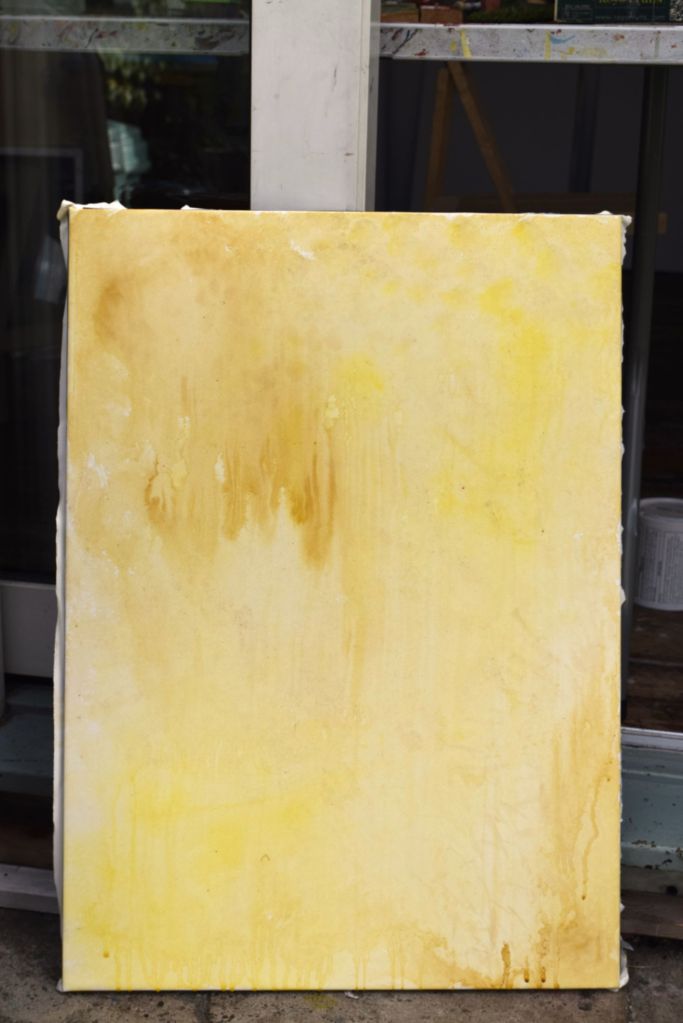
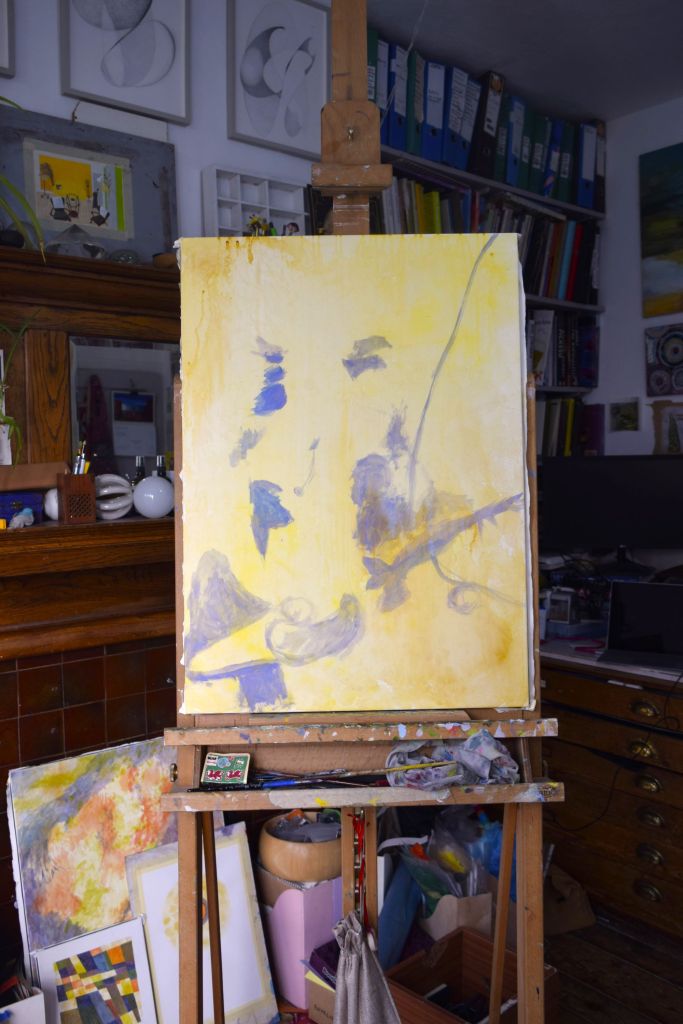
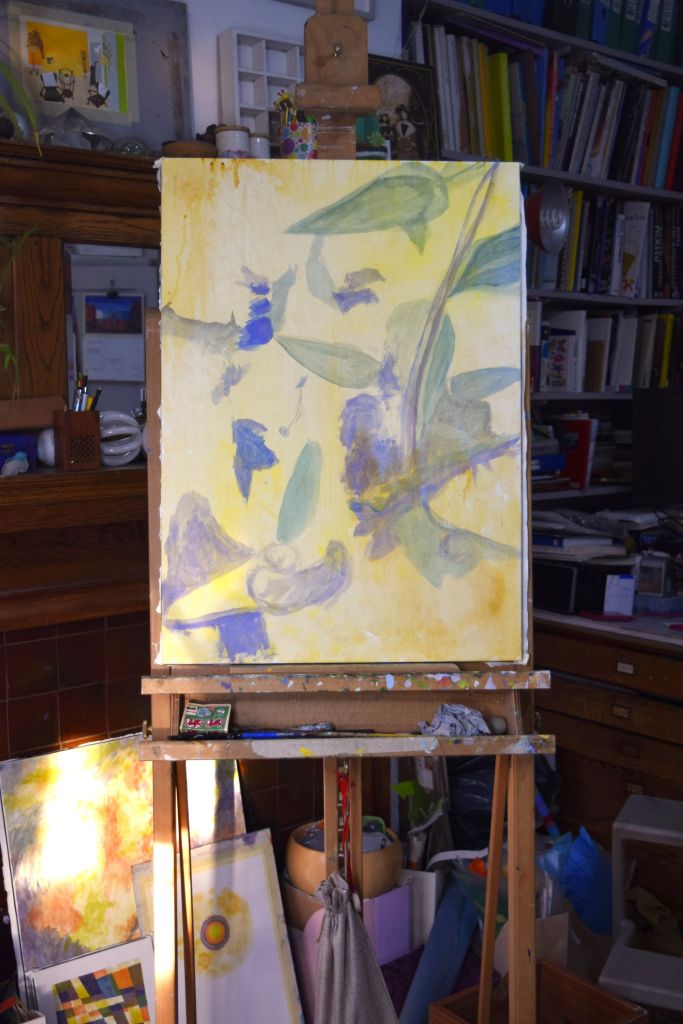
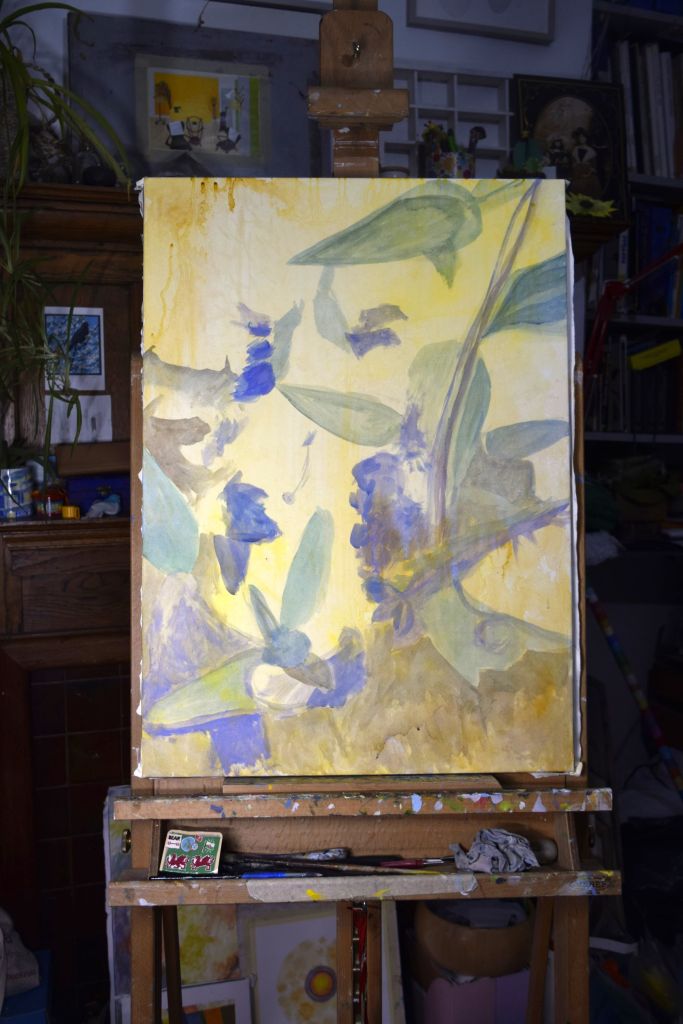
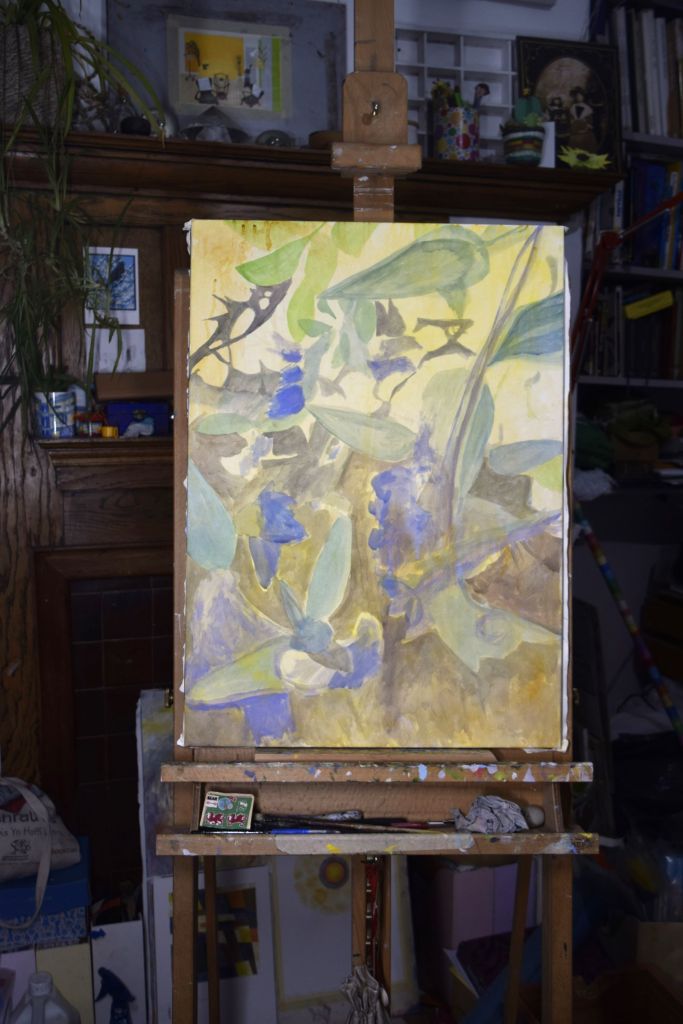
I am only at the first ‘drawing’ stages of this painting. Caryopteris, commonly known as Bluebeard, grows against the east-facing wall at the edge of our front garden. The Bluebeard spills over onto the street pavement and the early morning sun casts its light on the beautiful purply-blues of the small, delicate flowers.
I will be matching this painting with Blue Ventures an award winning charity that works to protect and conserve marine habitats in places where the ocean is vital to local cultures and economies. This is a charity that does hugely important work to protect our oceans whilst striving to improve the lives of communities that rely on small-scale fisheries. Based in Bristol, UK, their global work focuses on human rights, marine conservation and food security to tackle the underlying causes of poverty and environmental degradation.
CAMELLIA JAPONICA

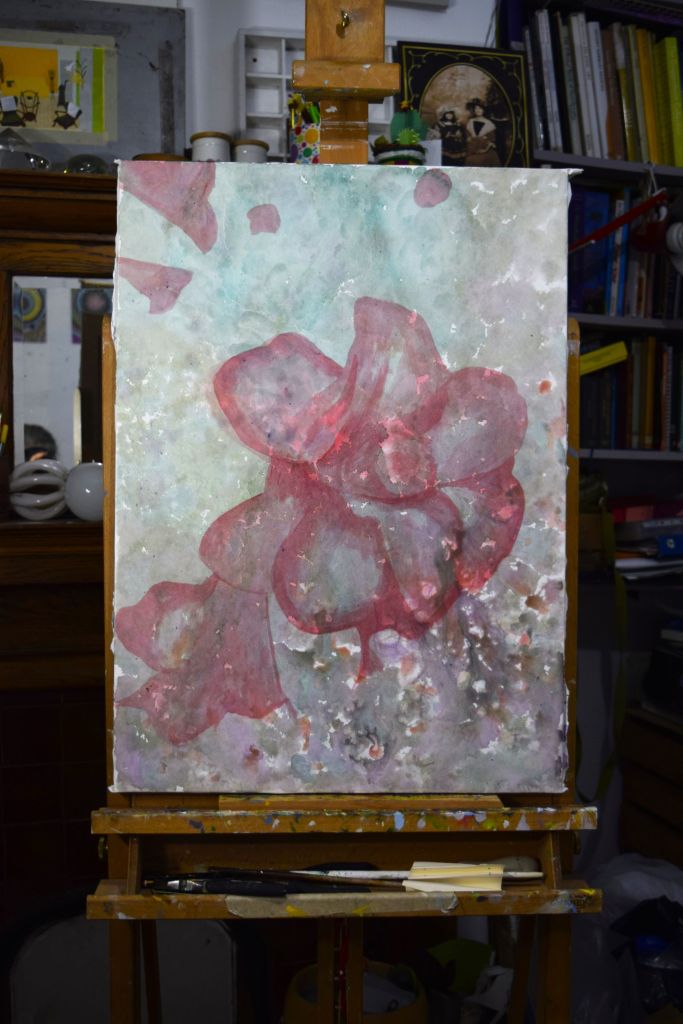
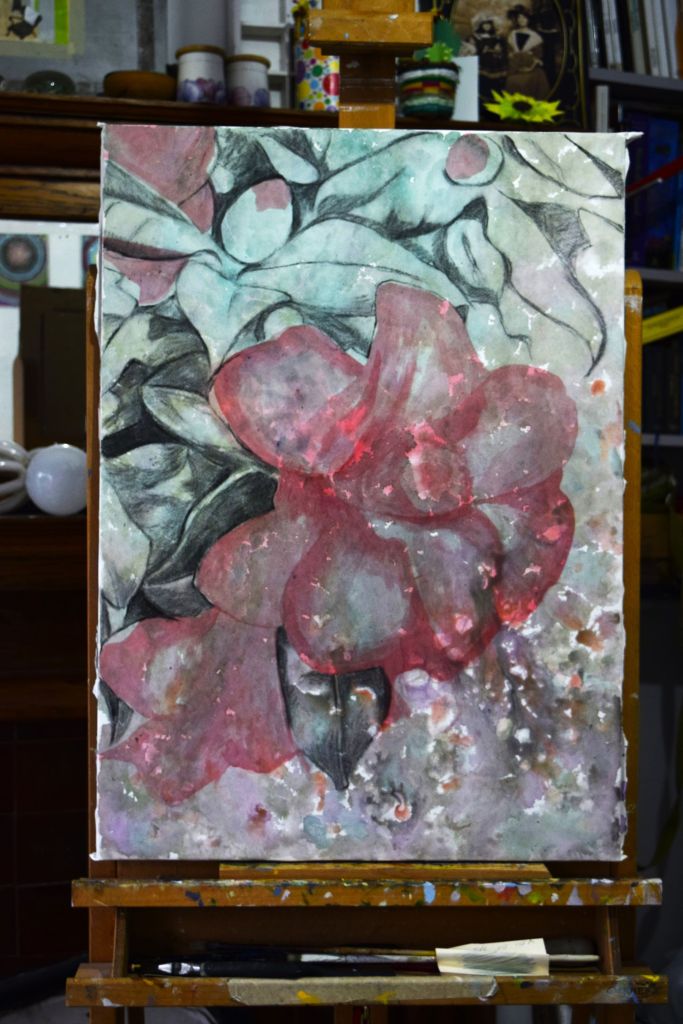
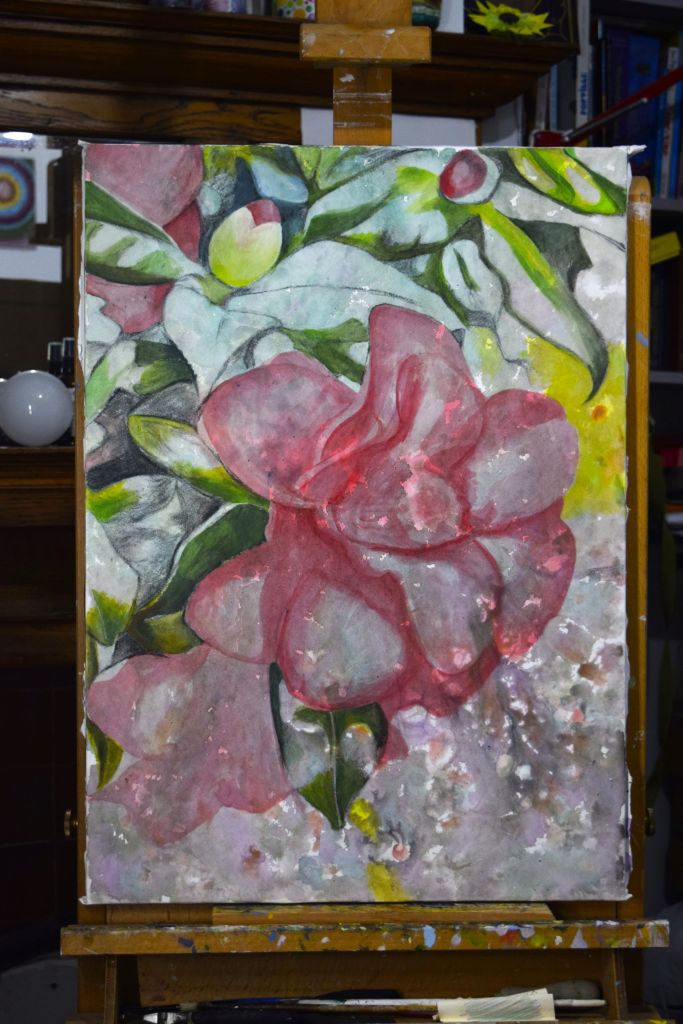
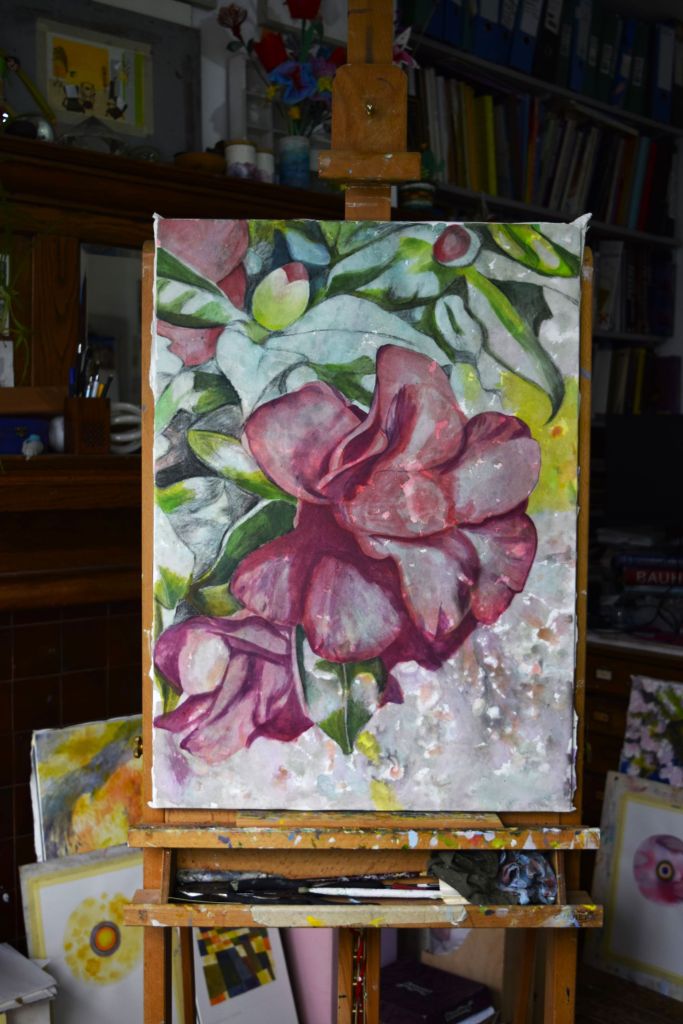
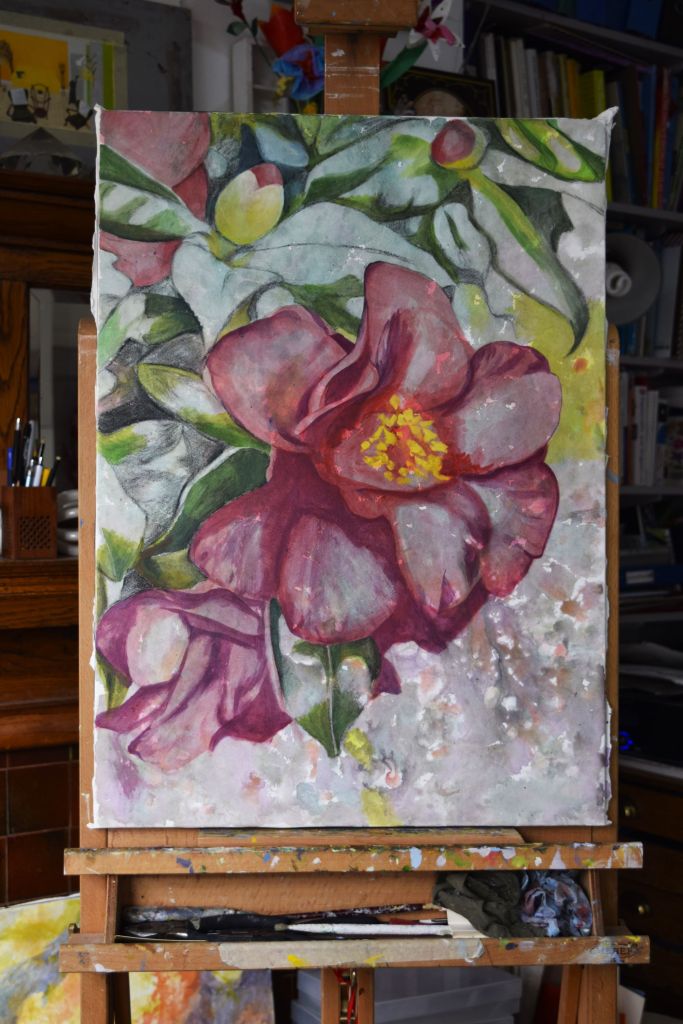
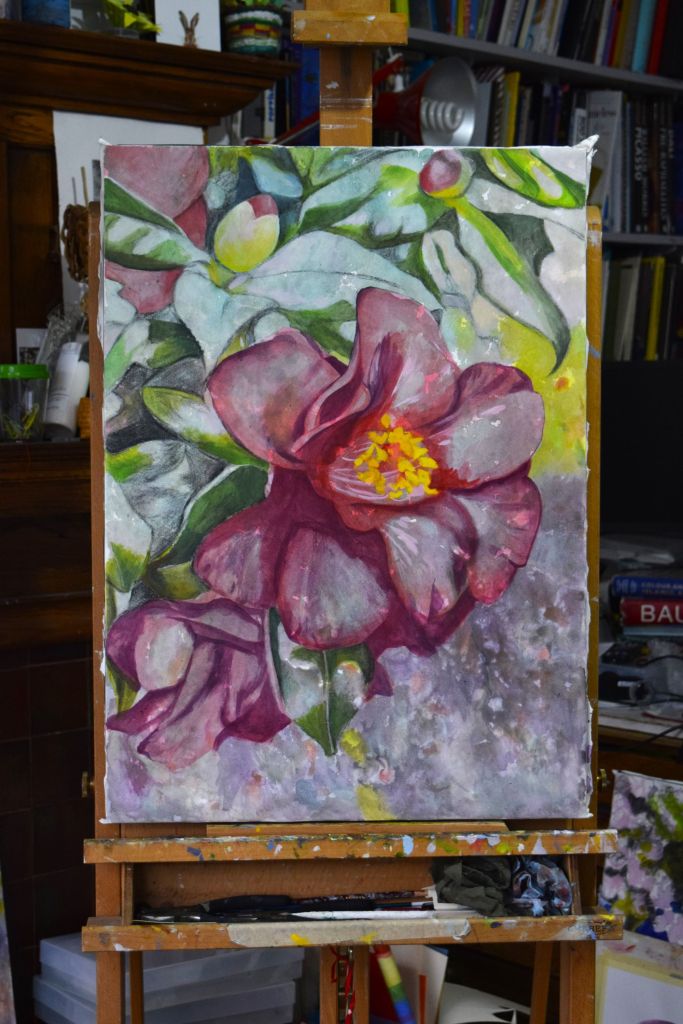
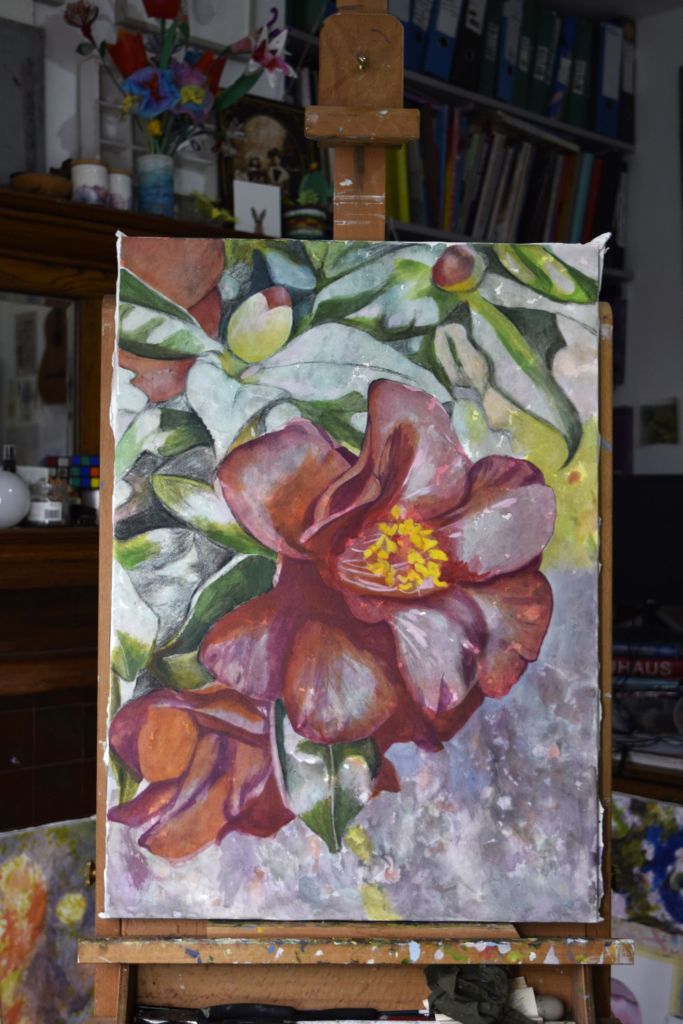
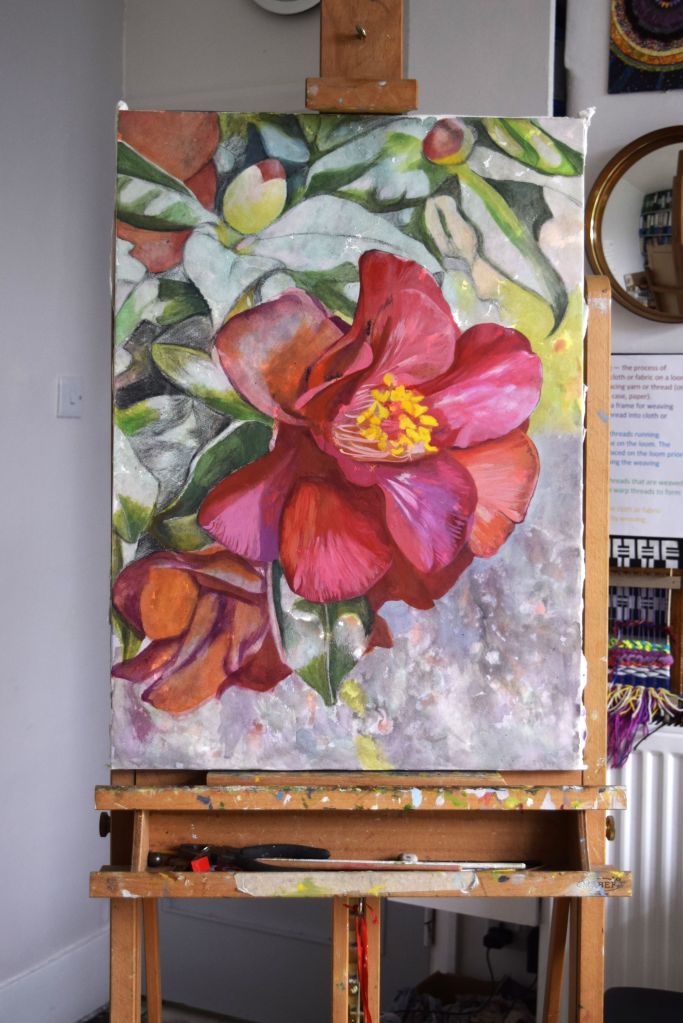
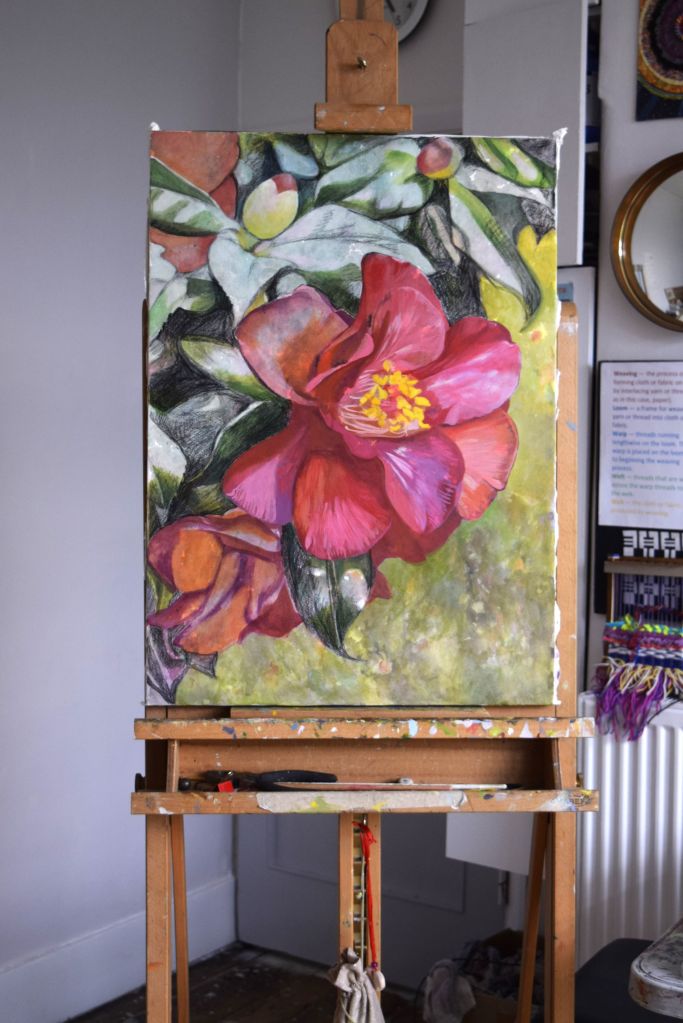
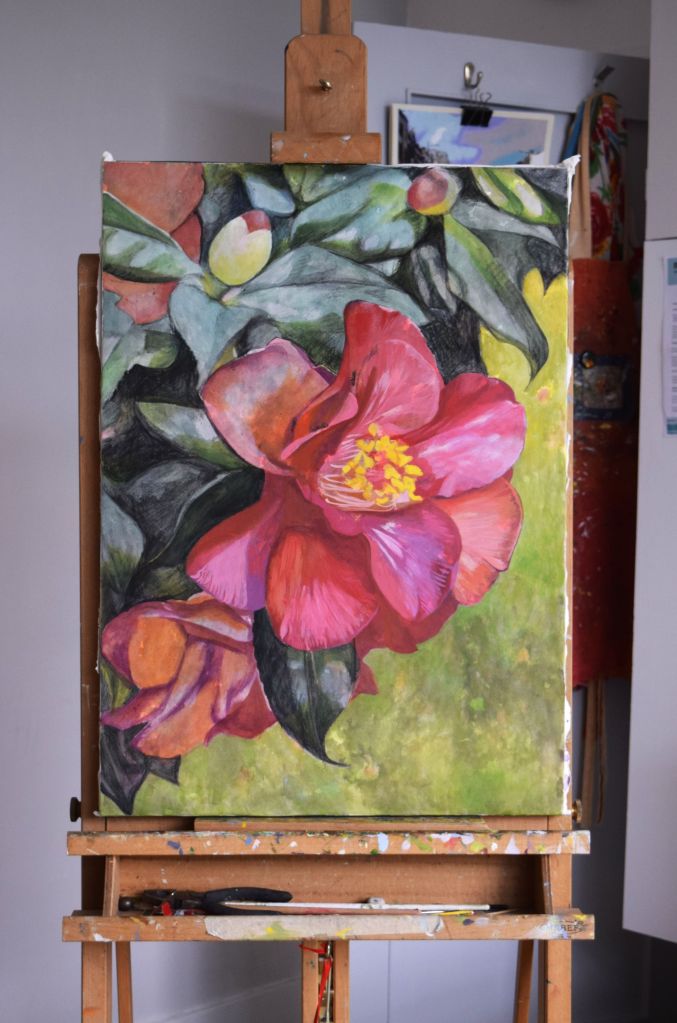
We have two Camellia trees growing in our back garden, this Camellia Japonica is the smaller of the two that we inherited when we bought our house. Having looked online it could be a ‘Adeyaka’ or ‘Jupiter’ variety. An evergreen woodland plant, it grows happily under the shade of next door’s large apple tree and provides some welcome bright winter colour when the flowers bloom early in the year.
I have noticed that the ants love to adventure up to the flowers – I have featured a few in my Camellia painting – I guess there must be some aphids around too that are attracting the ants (who ‘milk’ them for their sugary honeydew), but never enough to cause the plant any problems. With plenty of birds, hoverflies, ladybirds, beetles and other aphid predators visiting our garden I haven’t had to worry about aphids – even when they appear in abundance, they are soon brought under control by the natural ecosystem. With that in mind I have decided to match this painting with the charity London Wildlife Trust who do lots of amazing work to champion nature’s recovery in London, looking after wild places and increase people’s understanding of and connection to the natural world. I am especially interested in their campaign to ‘Garden for a living London’ which encourages people to attract wildlife to their gardens and suggests great ways to do this, so that the many residents of London can transform the capital’s three million gardens into a network of nature reserves!
BUDDLEIA and CROCOSMIA
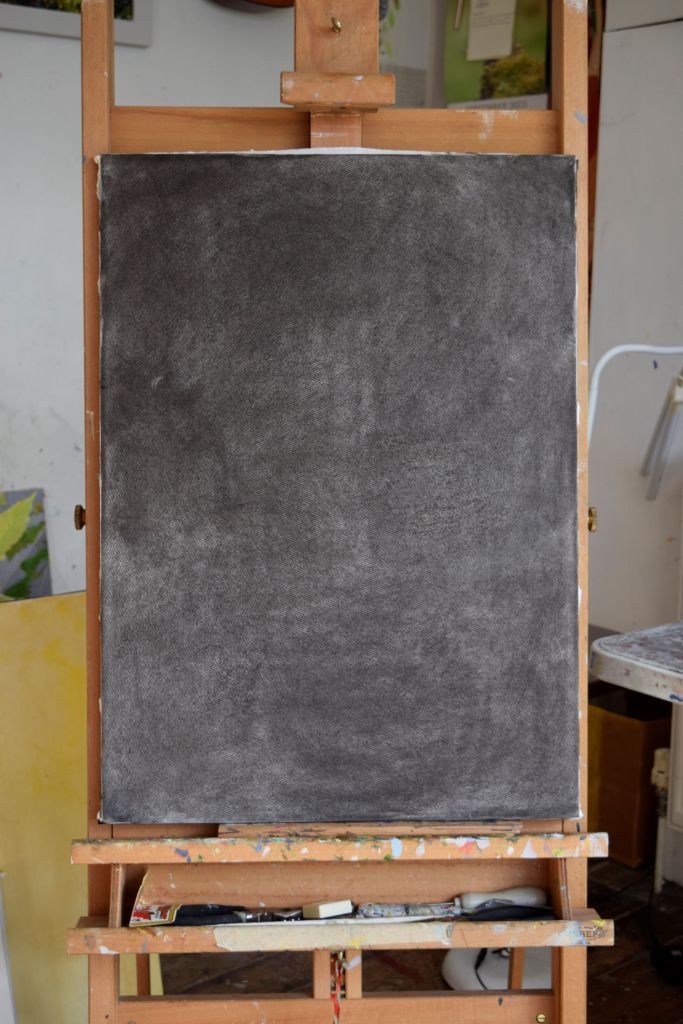
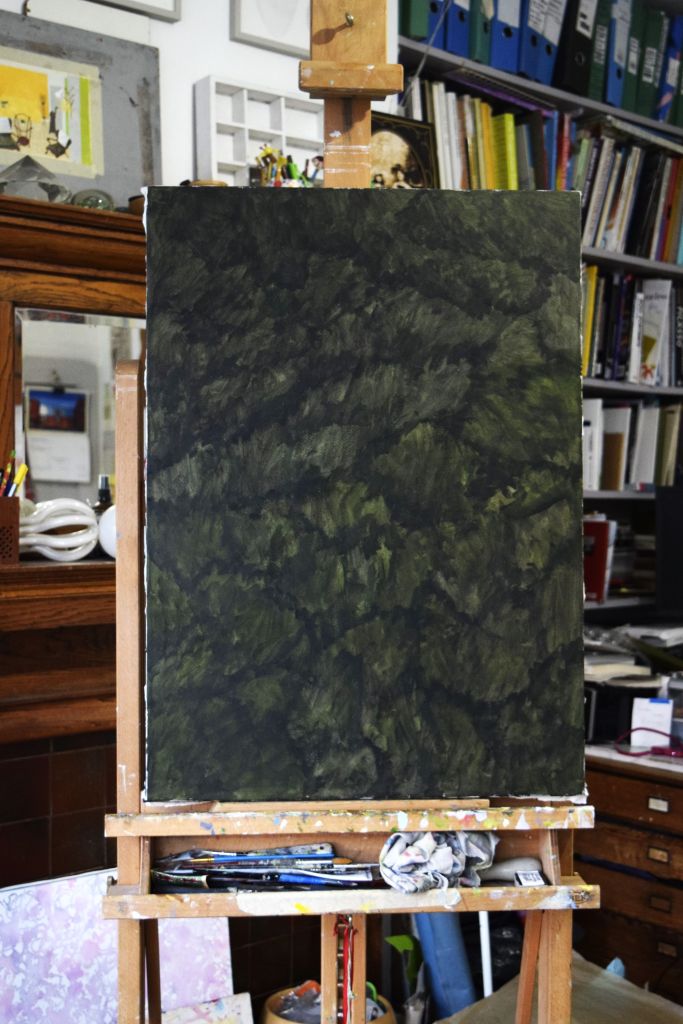
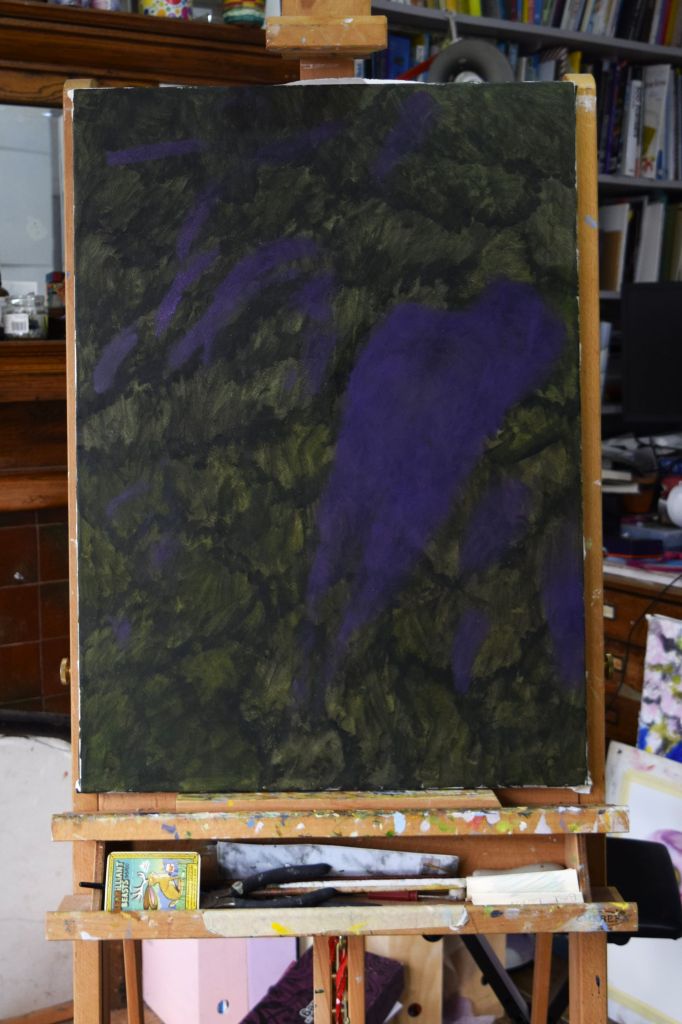
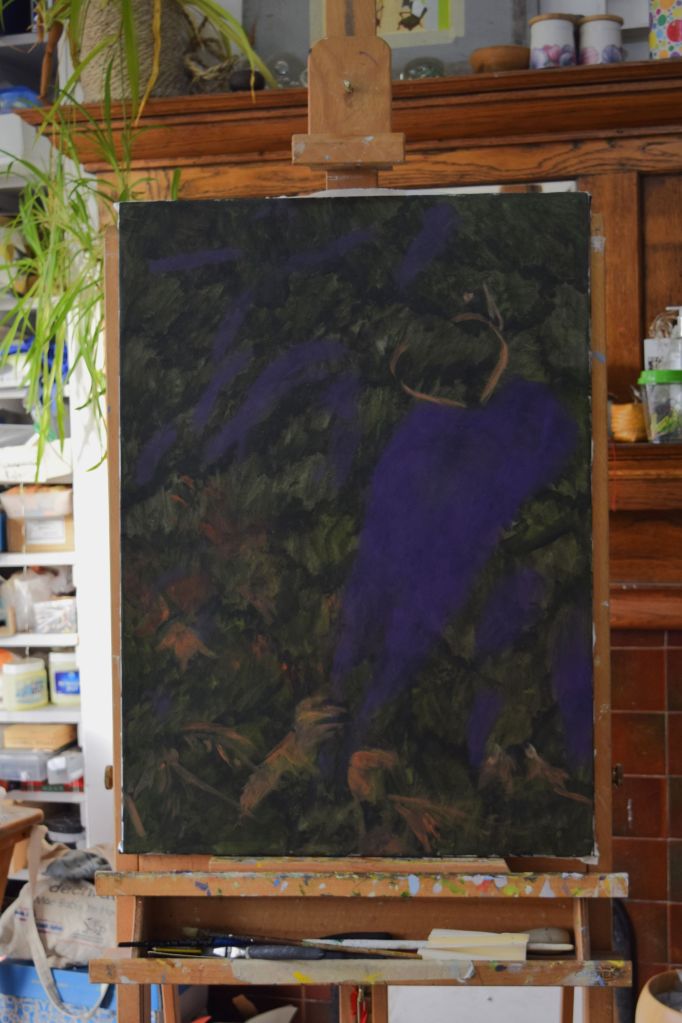
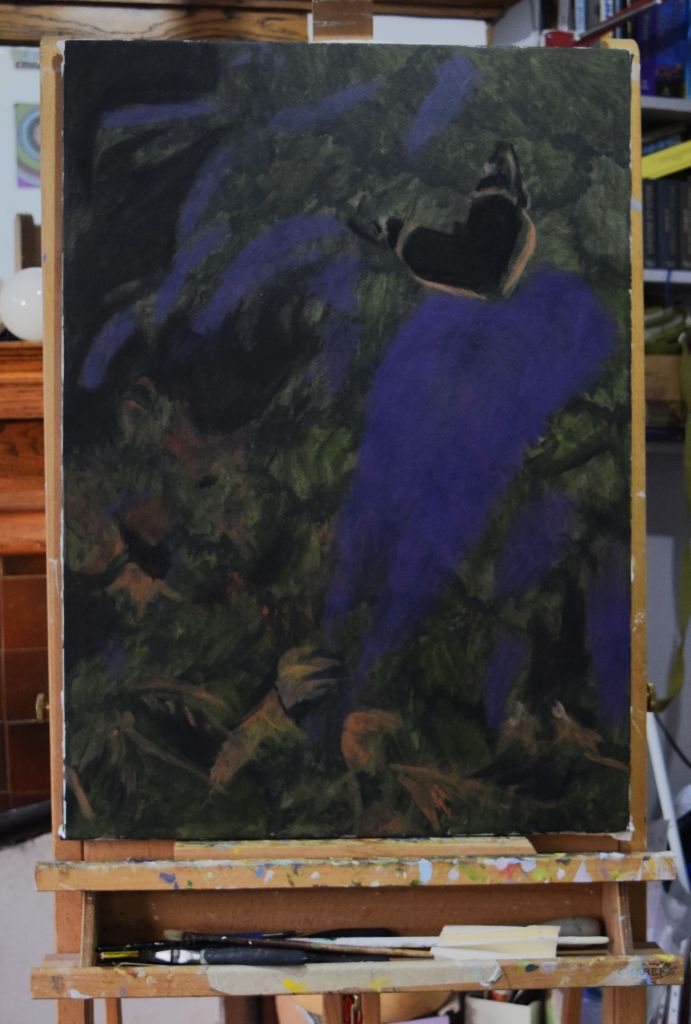
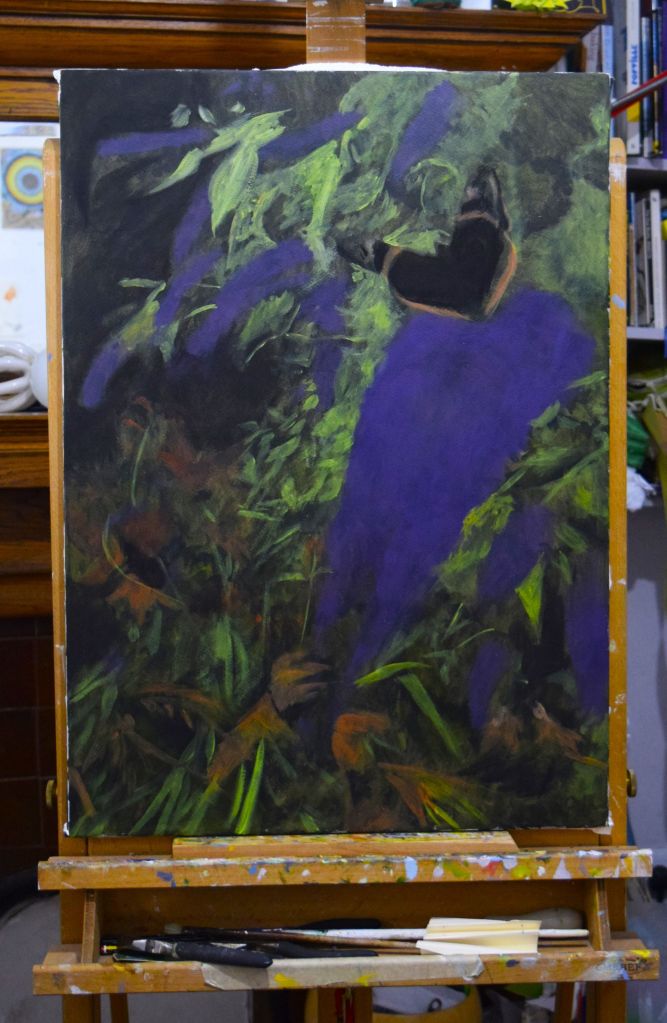
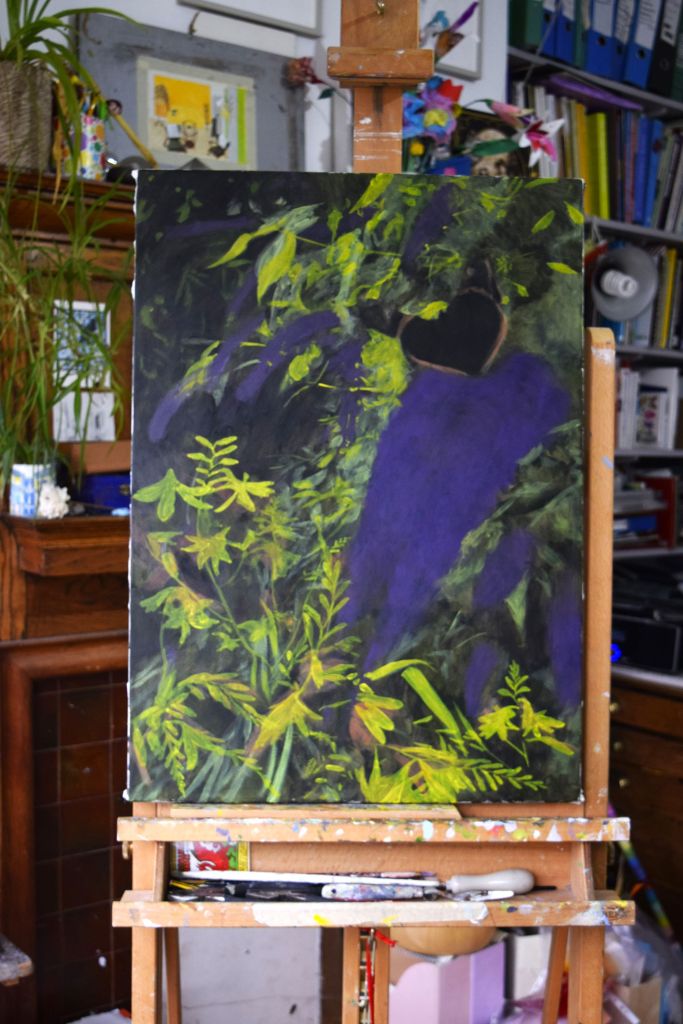
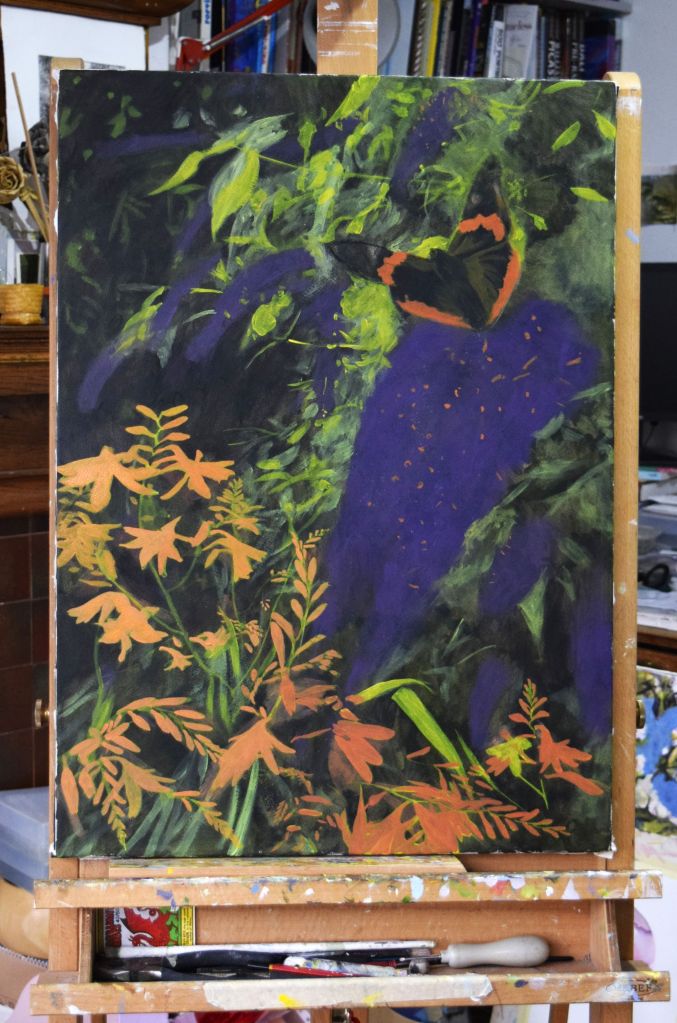
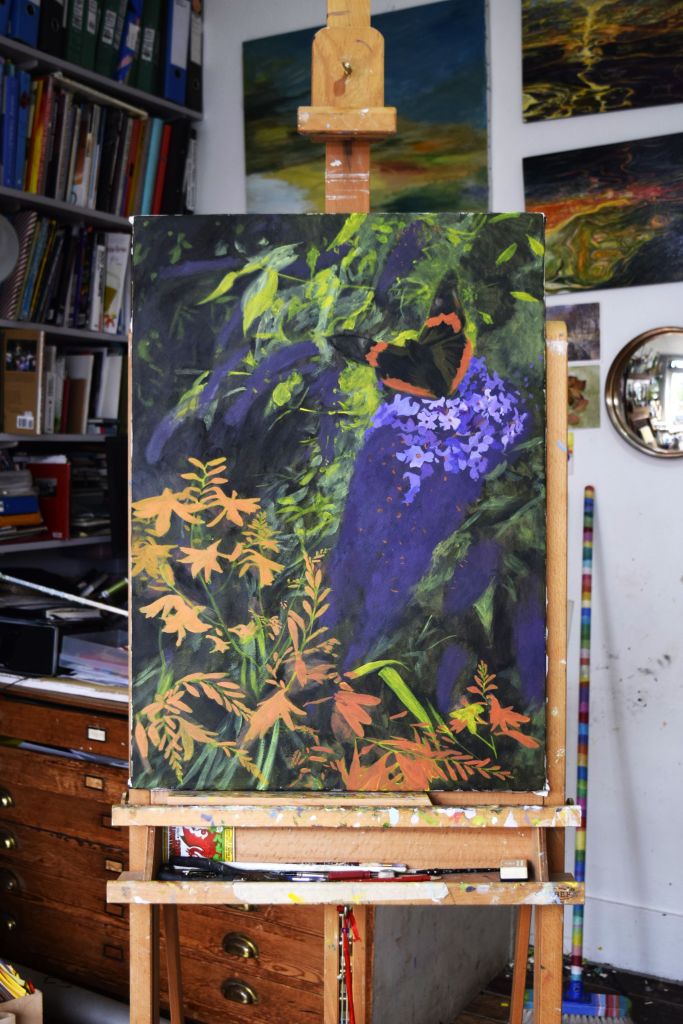
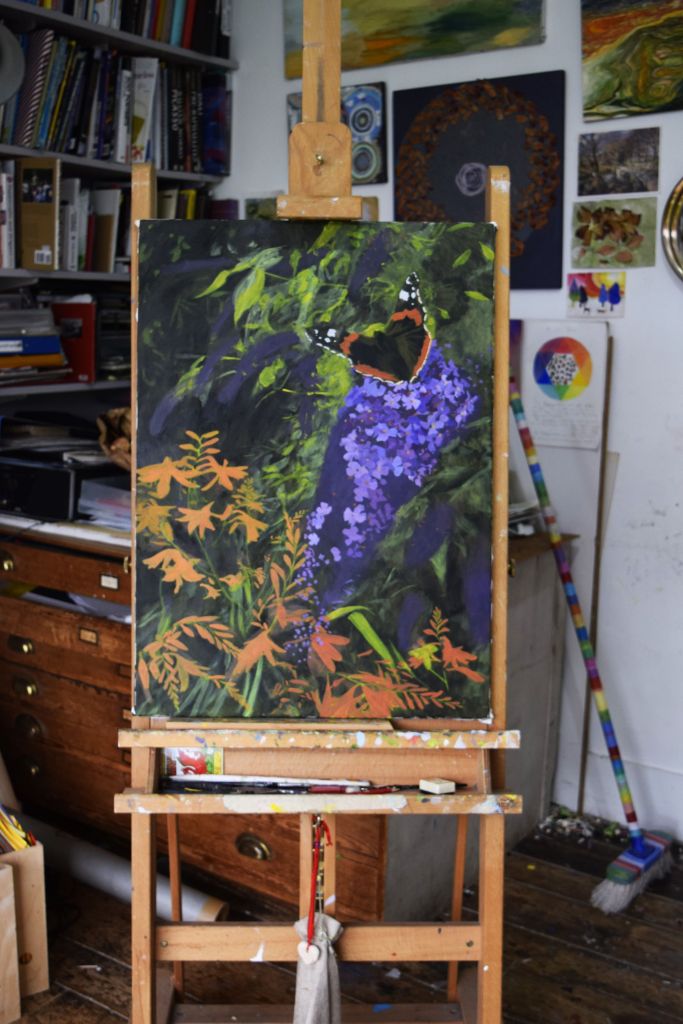
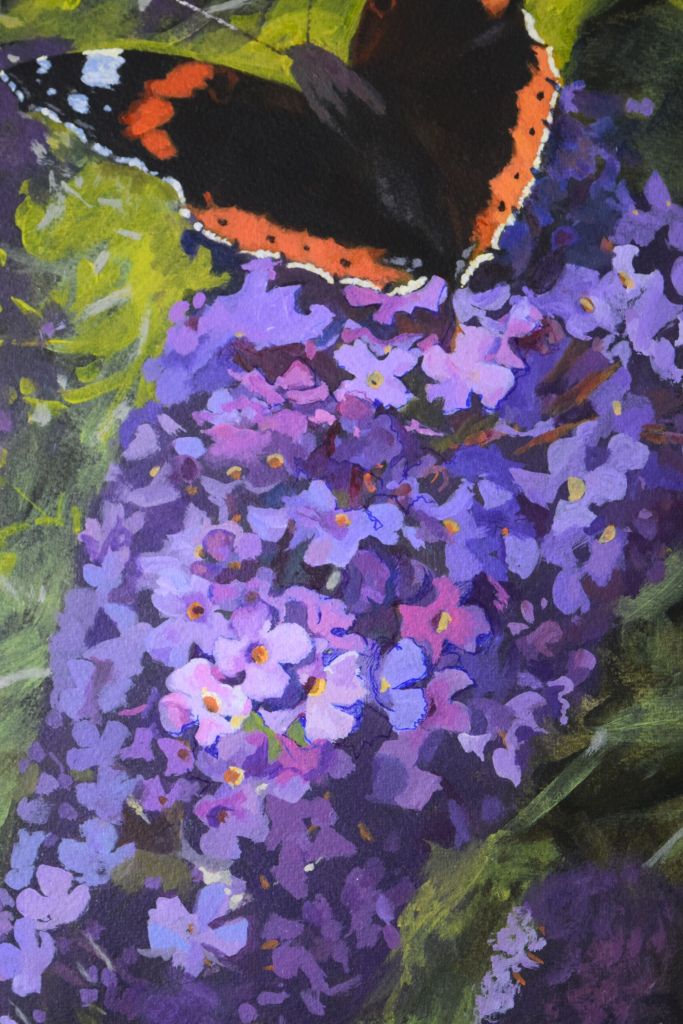
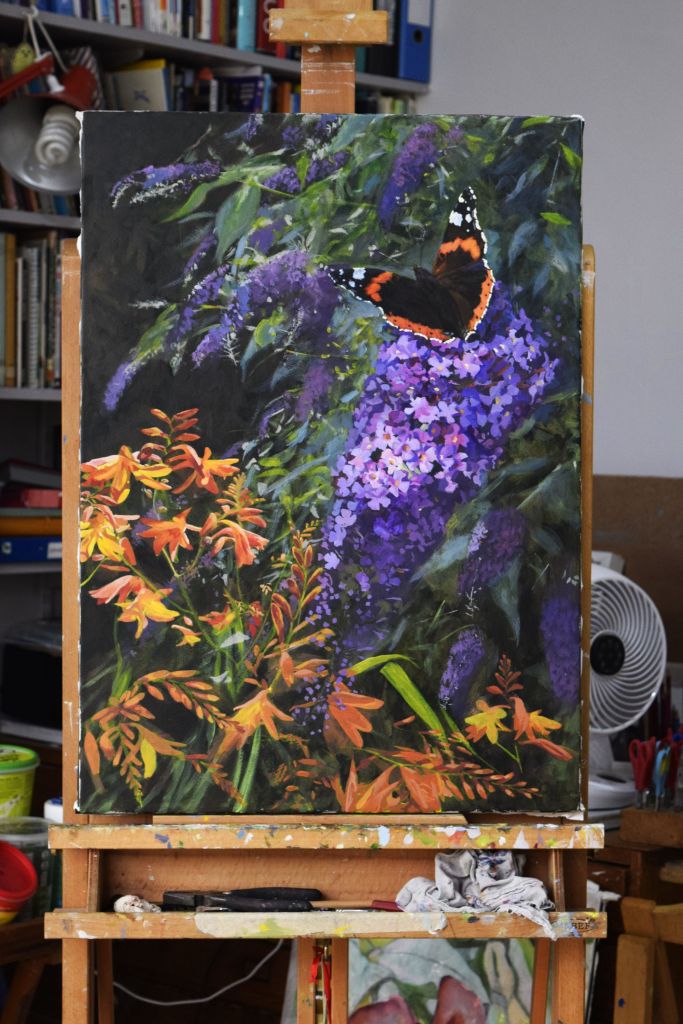
These two flowers grow next to each other in our back garden against a south-facing fence. Buddleia is often called know as the butterfly bush and ours definitely attracts lots butterflies, especially Red Admirals – with one featuring in my painting. Crocosmia is native to the grasslands of southern and eastern Africa and is listed on Schedule 9 of the UK Wildlife & Countryside Act as an invasive non-native species; therefore, gardeners should take efforts to control them. Happily I can report that my clump of Crocosmia (also known as Montbretia) is containing itself to its small patch and providing fantastic colour and shape contrasts to the Buddleia growing alongside.
Butterfly Conservation – are on a mission for us all to take bold, imaginative steps to conserve butterflies and moths, helping to restore biodiversity, mitigate the climate crisis, and start to rebuild the vital kinship between people and the natural world. For this reason I have chosen to support them with this painting – a few of my young art club members were very keen for me to include butterflies in my flower paintings and it is so important for us to work towards protecting the natural environment so that future generations can take pleasure in all the joys of nature that we so often taken for granted.
APPLE BLOSSOM
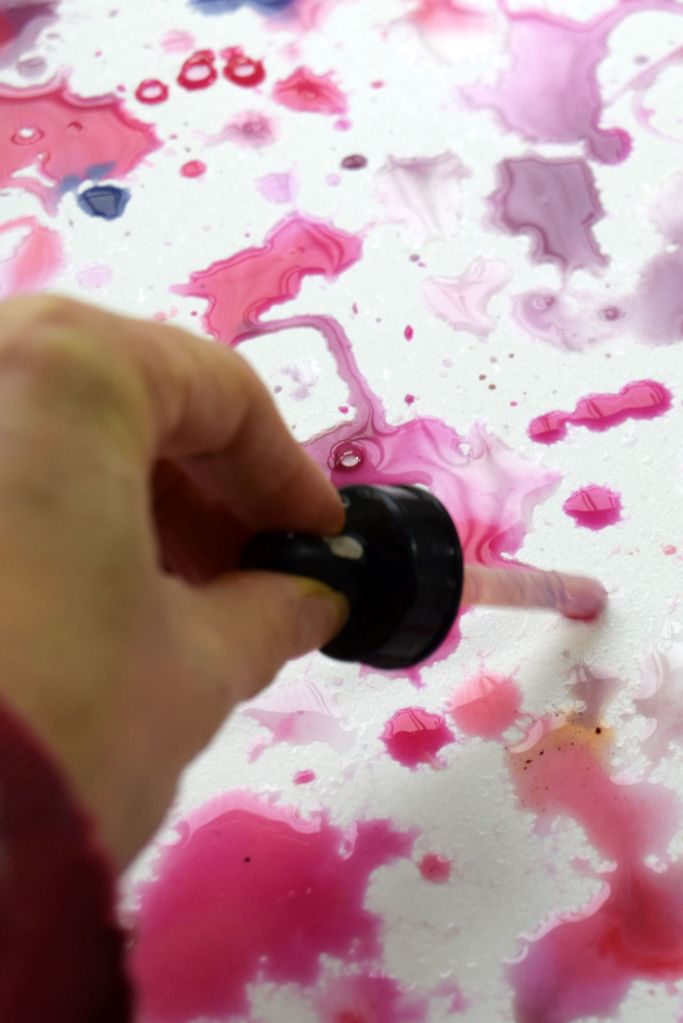
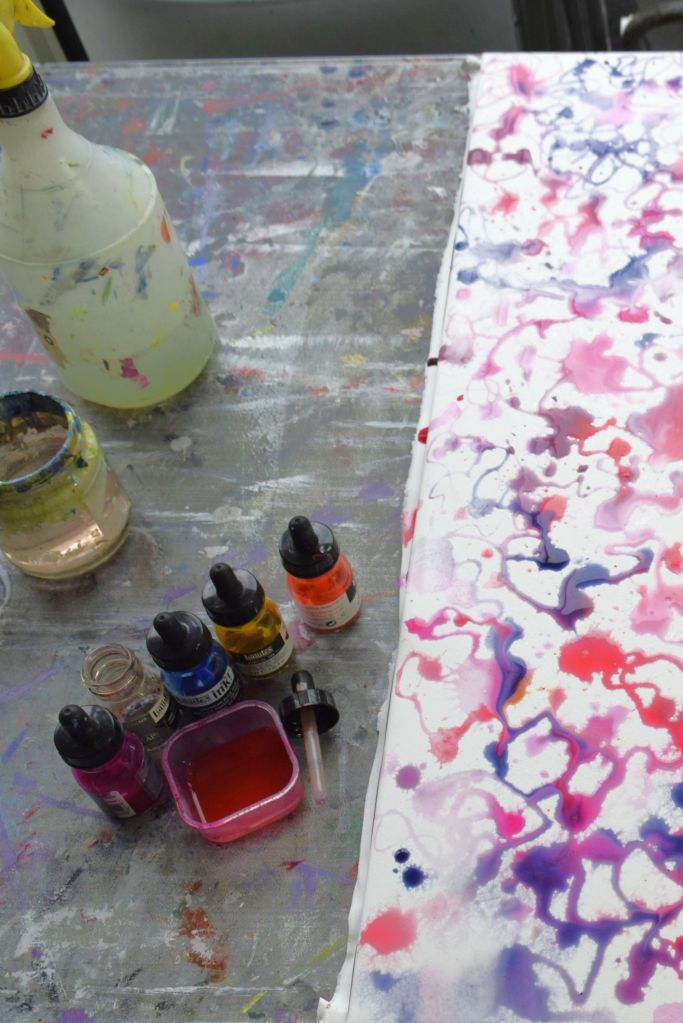
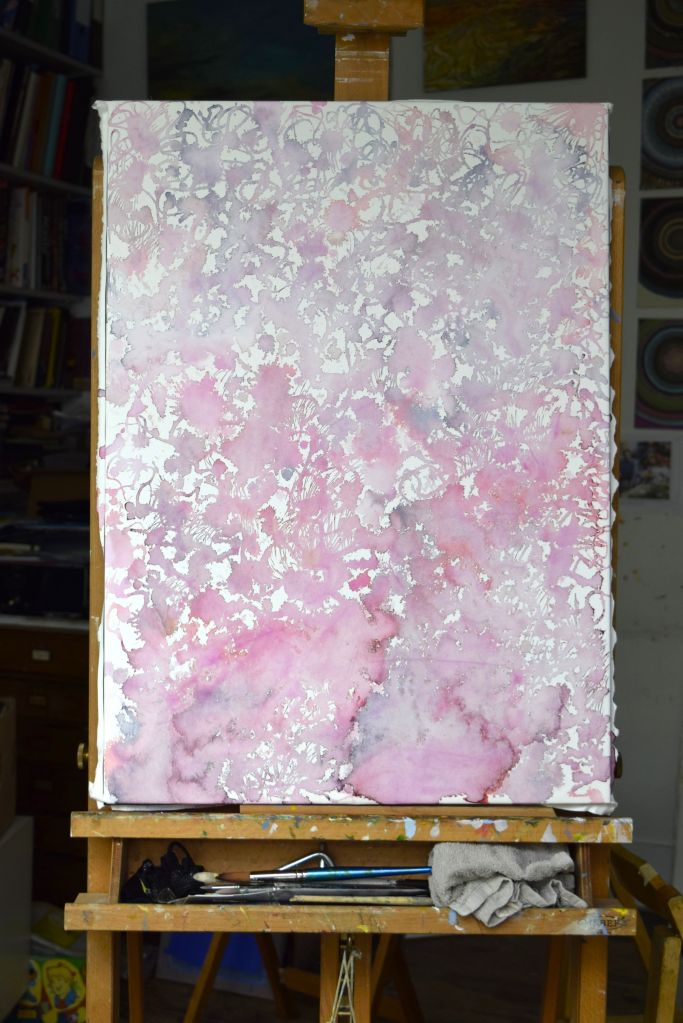
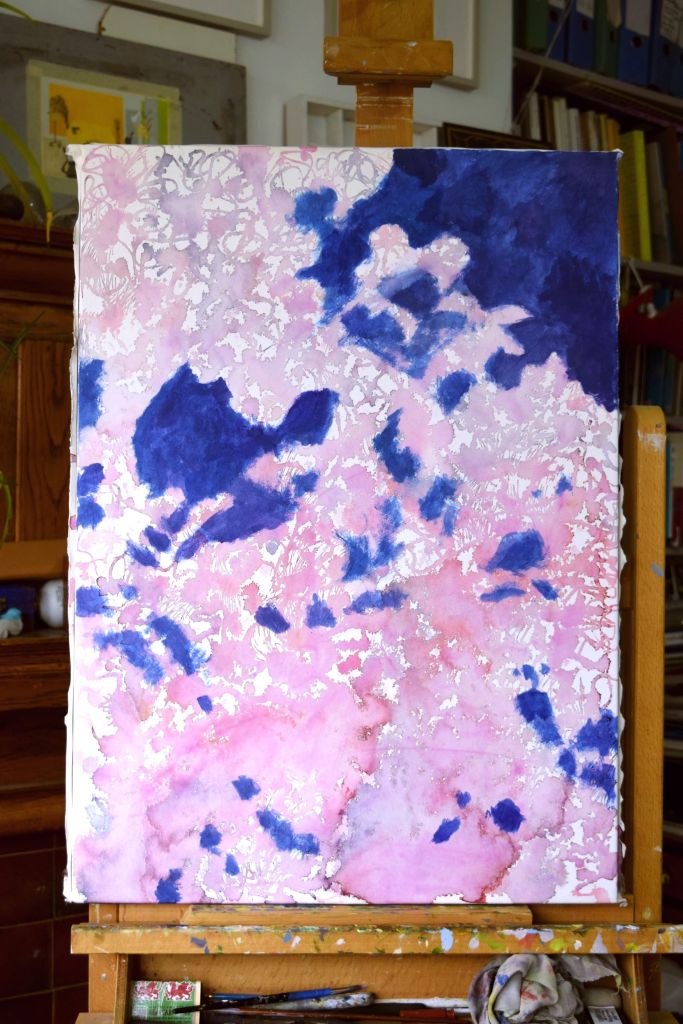
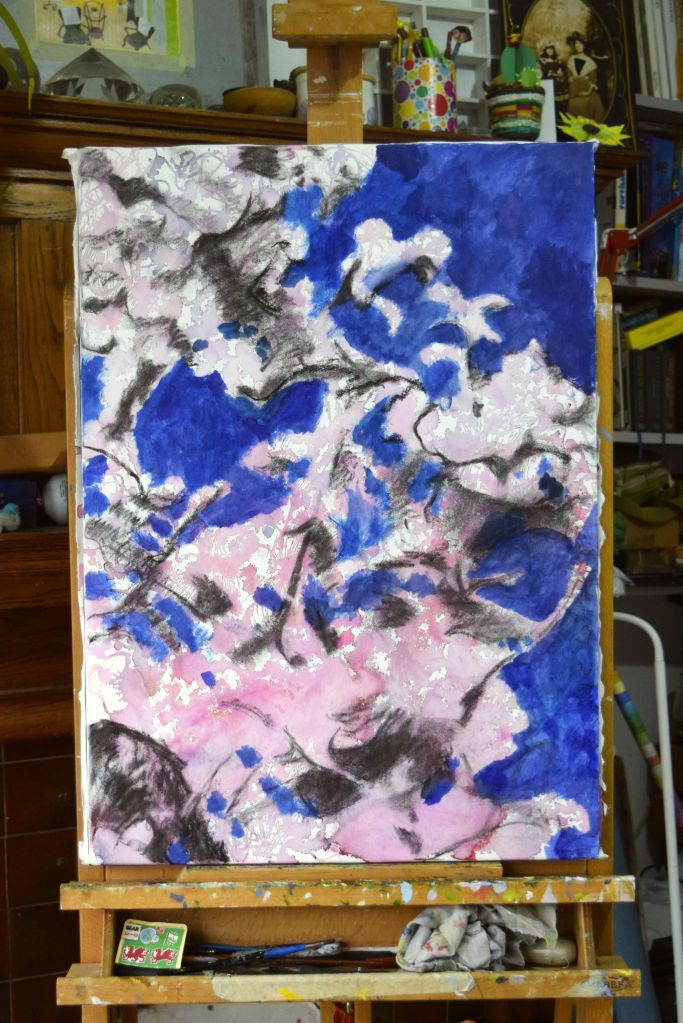
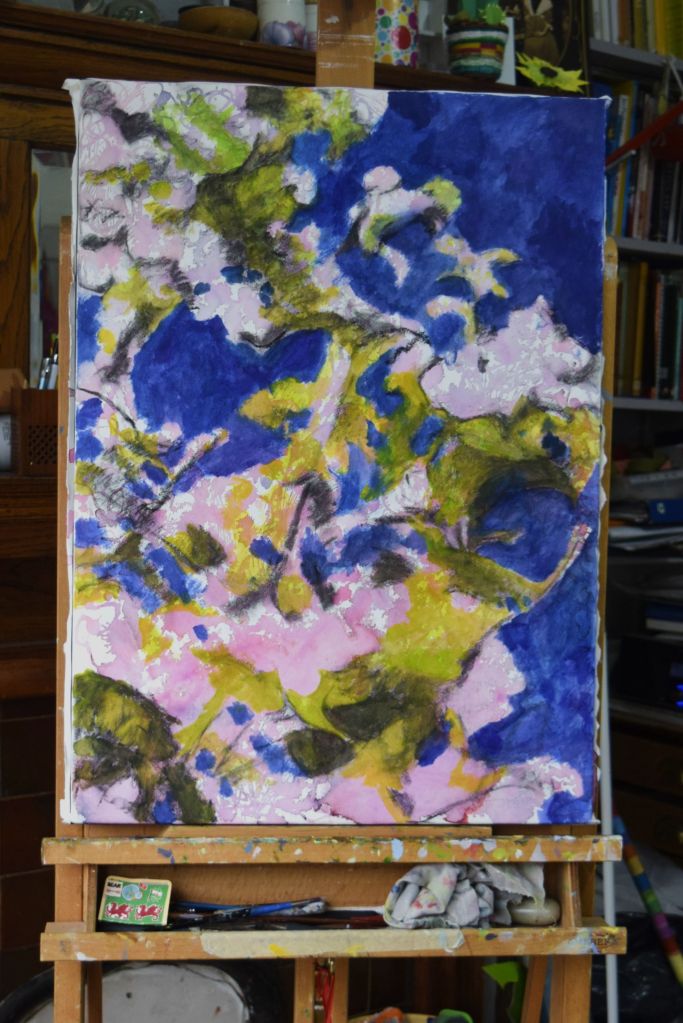
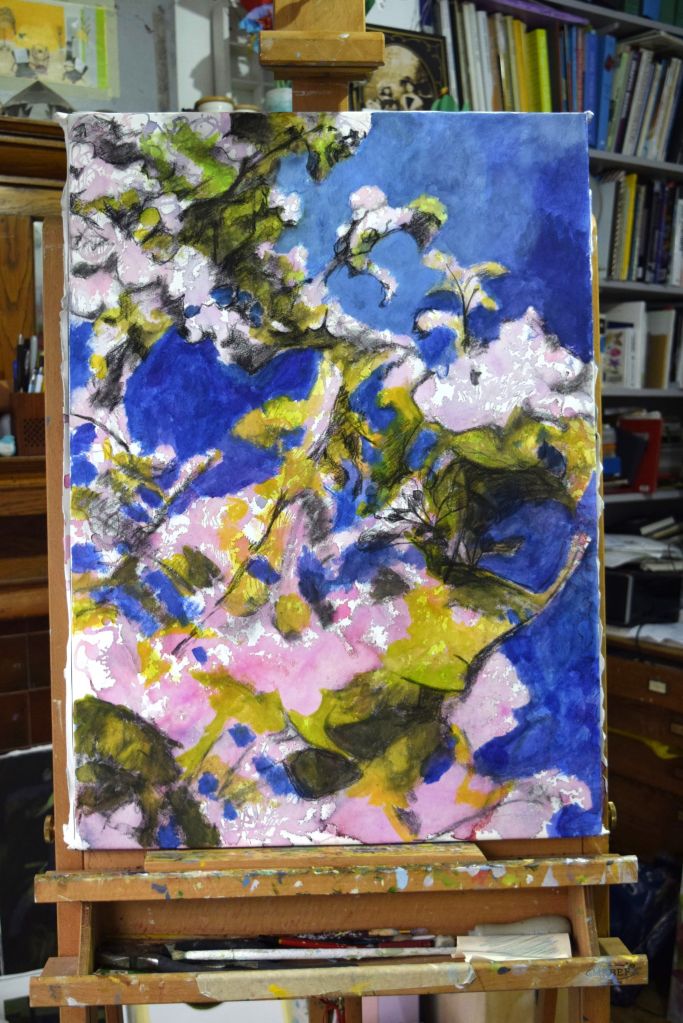
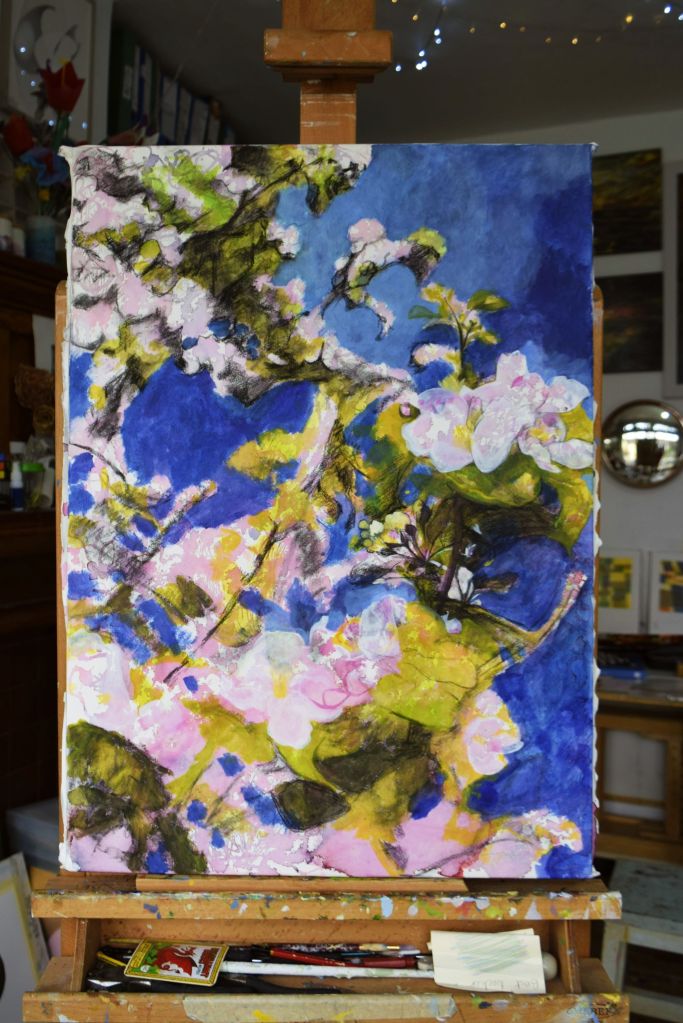
This is the blossom that grows profusely on our neighbours old, large apple tree. It grows against our adjoining fence and overhangs our back garden so that we have an equal share in the pruning of the tree and the big job of harvesting of apples! All the work is worth it to have the explosion of beautiful apple blossom that greets us in the summer, set against the blue skies. We are not sure what species of apple tree it is, but the large fruit ripen in autumn to green and red, they taste sharp and we use them as cooking apples (we bake lots of pies and crumbles, and another neighbour collects the windfalls to make apple cider vinegar).
Once finished, Limited Edition Fine Art Giclée Prints of my ‘Apple Blossom’ painting will be sold in aid of The Orchard Project – the only national charity dedicated to creating, maintaining and celebrating community orchards, with the aim for everyone in towns and cities across the UK to be within walking distance of a thriving, community-run orchard.
 50 Flowers for 50 Charities